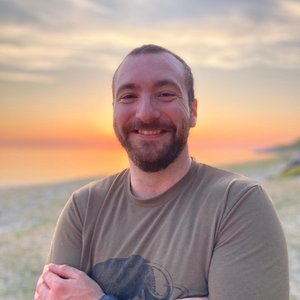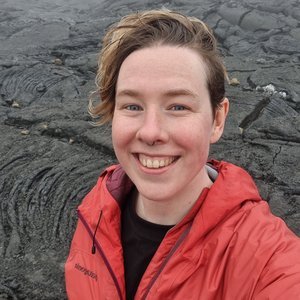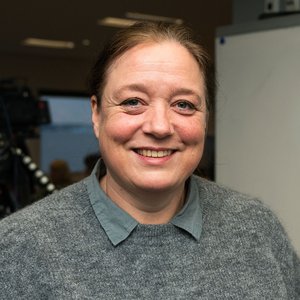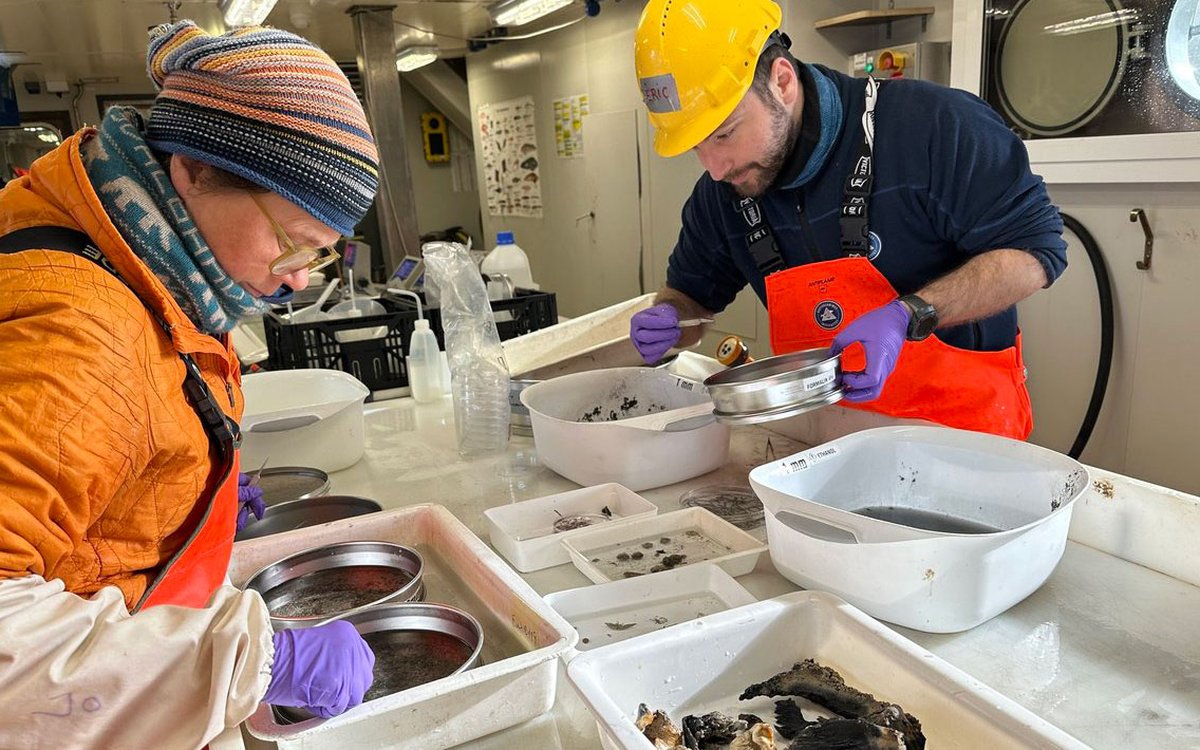
Josefina Johannson and Èric Jordà Molina sorting the remaining content of the sample sieved with a 300 µm sieve.
Photo: Marlene Pinheiro
Josefina Johannson and Èric Jordà Molina sorting the remaining content of the sample sieved with a 300 µm sieve.
Photo: Marlene PinheiroPublished: 20.05.2026
The view was familiar: a vast seafloor covered with crinoids (sea lilies) and funny sea pigs (Kolga hyalina)., sparkled with a few burrowing anemones —beautiful, but, after a while, a bit predictable for us annotating the video footage. The first two transects of the dive (ca. 400 m) had offered few surprises.
Then, just a few meters into the final transect, something unusual appeared in front of our screens.
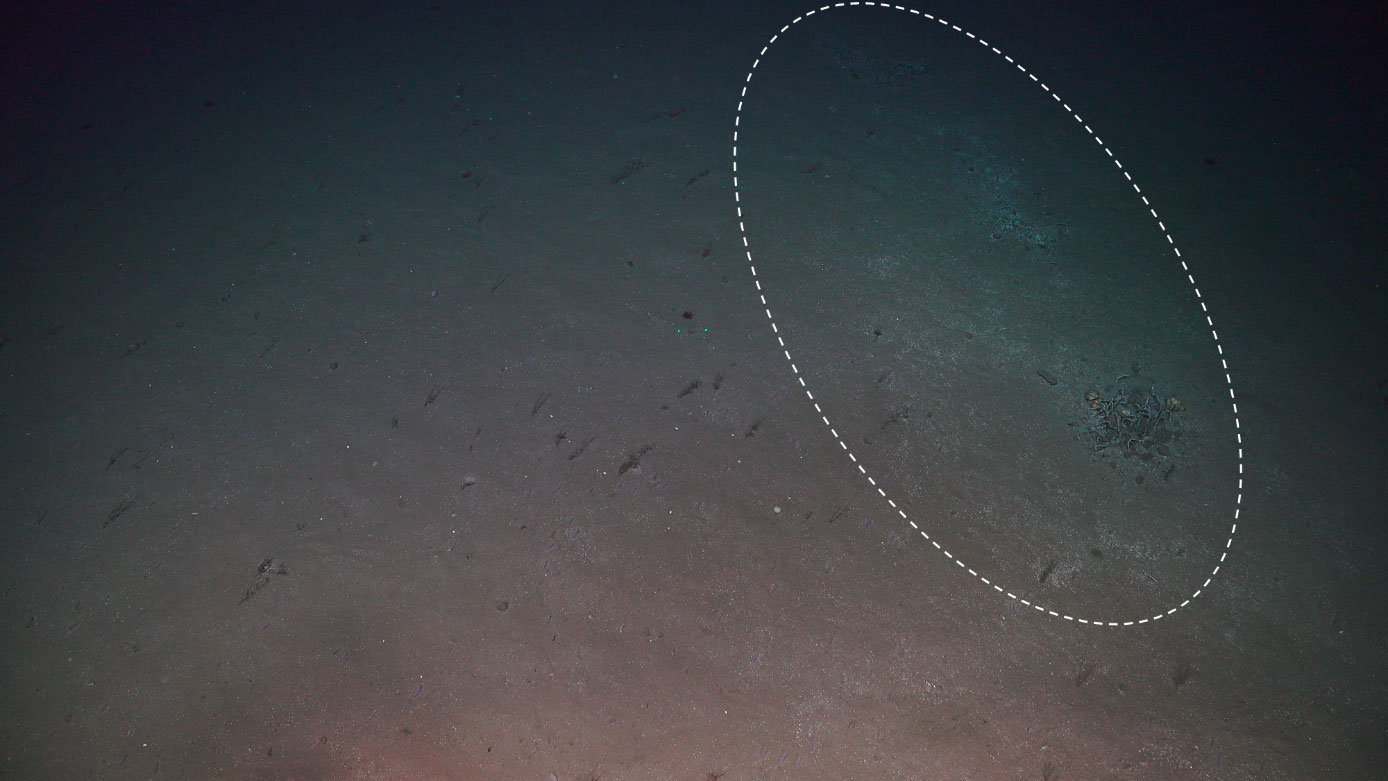
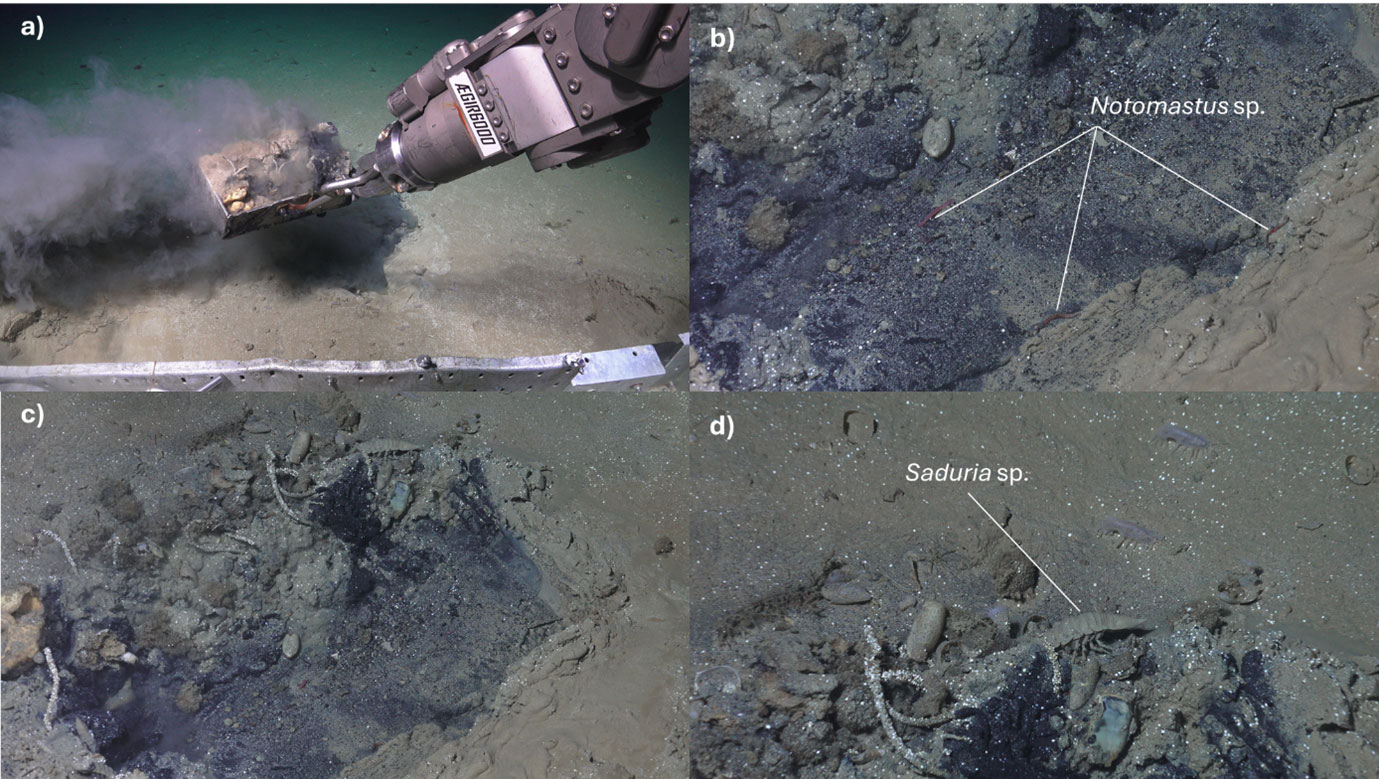
Amid the otherwise uniform landscape, Èric Jordà Molina (IMR Tromsø, Benthic Communities) and Camille Saint-André (IMR Tromsø, Benthic Communities) spotted a small patch that simply did not fit in. Rising from the seabed, striking tube‑like structures emerged. At first glance and from far away, they looked like sedentary marine worms—perhaps belonging to the serpulid polychaetes that build hard, white chimney‑like tubes. What made it truly puzzling was their concentration: why were so many packed into such a small area?
Because the ROV was in the middle of a video transect, we could not stop right away; curiosity, however, was already sparked. We dropped a waypoint to mark the mysterious spot (uninspiredly called “weird patch” when communicating with the ROV pilots), with a plan to return as soon as the video line and geological sampling were complete.
Little did we know that this odd patch would soon reveal itself as something far more exciting—a reminder that even in the most familiar places, the deep sea is always ready to surprise us.
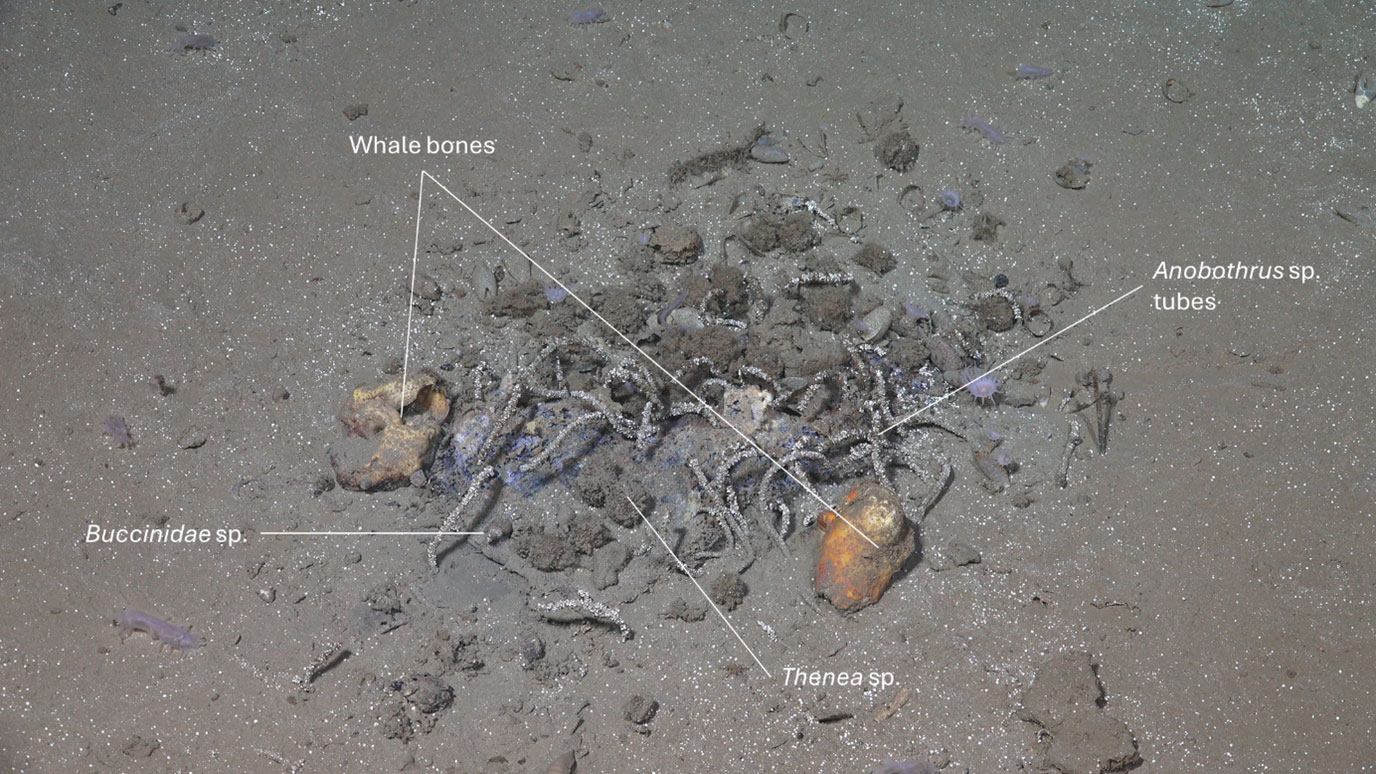
Tracking back our steps towards the waypoint, we found the sought-after patch. When looking closer, we could see some aggregations of what looked like small round sponges of the Thenea genus, various sandy tubes and a couple of orange blobs. The discovery clearly warranted a sampling attempt. After a quick discussion with the ROV pilots, the famous (or rather infamous) “Frankenstein” scoop – or “Frankenscoop” – was brought into action!
As soon as the Frankenscoop dug into the mud and lifted the sample, a dark black plume of sediment arose, indicating possible anoxic conditions (a depletion of oxygen) in the deeper sediment layers. This situation often occurs when a high organic load is present in marine sediments, promoting quick bacterial growth which rapidly consumes oxygen while decomposing organic material. This in turn creates an extreme environment for low-oxygen tolerant species to thrive, such as certain polychaetes, bivalves and other species. Interestingly, zooming into the hole created after our first dig, we could spot polychaete individuals of the Capitellidae family crawling among the sediment. This family of polychaetes is also present in sediments highly enriched with organic matter under fish farms in the coast of Norway, with Capitella capitata (agg.) being the most known and usually used as an indicator species for highly anthropogenically impacted sediments. However, this finding pointed towards a much more natural event, nothing in which humans would have intervened.
After placing two scoops of the patch into one of the boxes of the ROV drawer, we went down to the lab to prepare for our precious, and potentially smelly, sample. Roughly an hour after leaving the seabed, the ROV finally emerged through the moonpool and was safely recovered on deck. As the vehicle was secured, attention quickly turned to its drawer, where the long-awaited sample was retrieved and transferred into a large tub for sieving. Expectations were running high among the ROV pilots and the cruise leader, Riley Meyer (IMR Bergen, Benthic Communities), as the team gathered around.
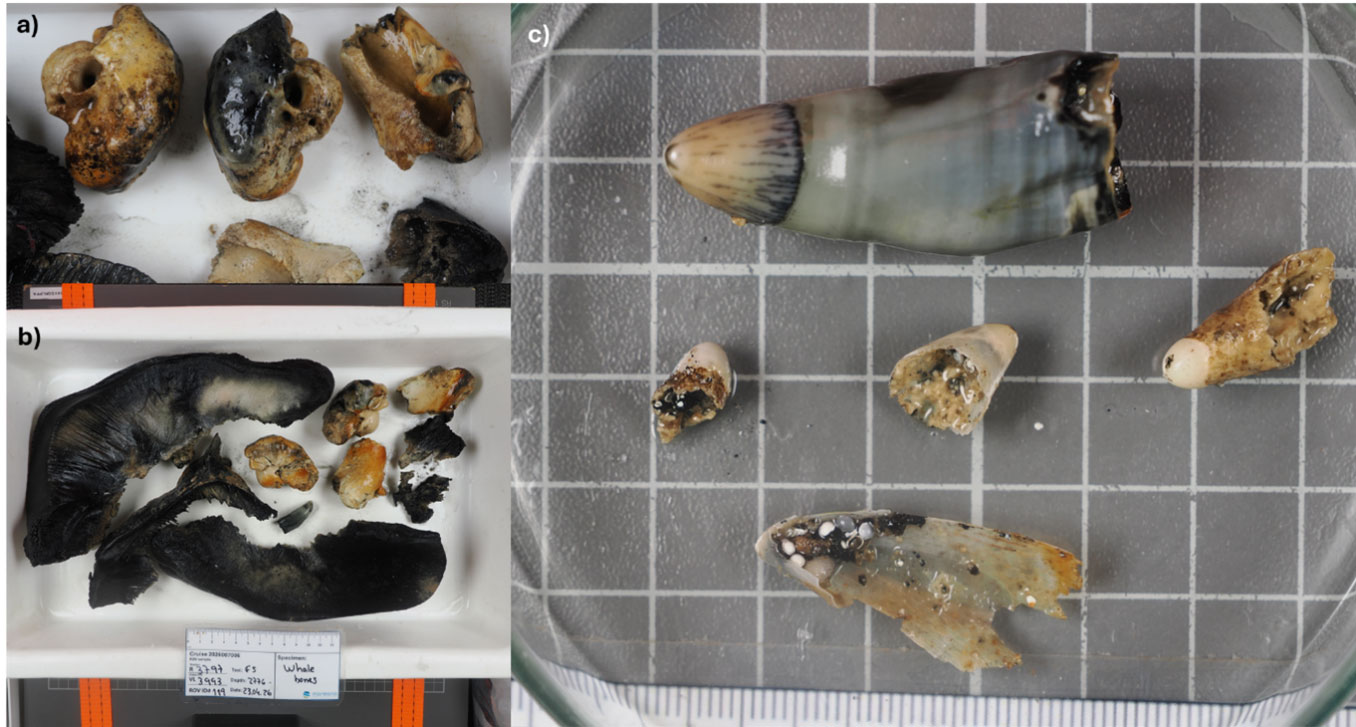
The smell was not so bad after all, but we used gas masks as precaution. It was soon obvious that we were dealing with a whale-fall sample, as we began to retrieve whale bones and teeth. We really felt like true archaeologists - like the Indiana Jones of the deep sea! Camille could not contain her excitement when holding one of the biggest teeth in her hands!
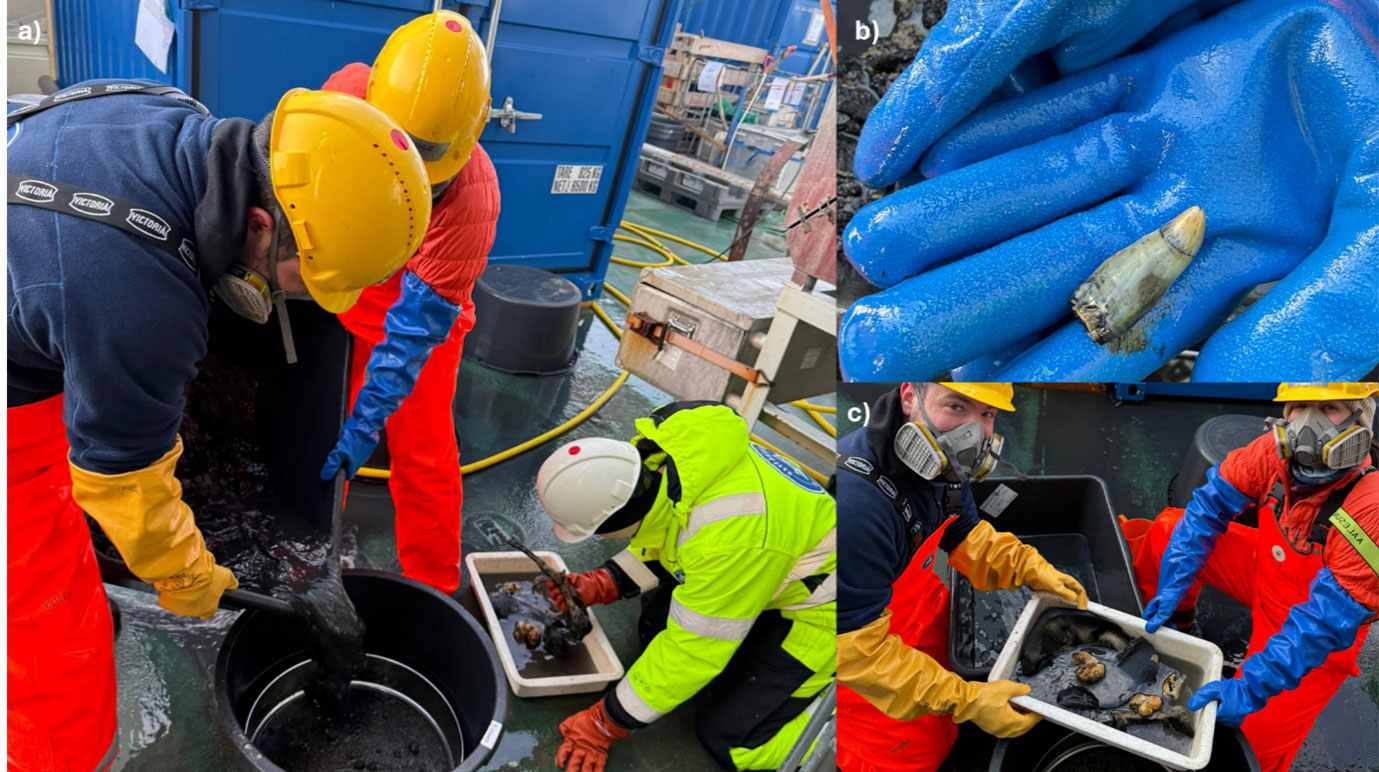
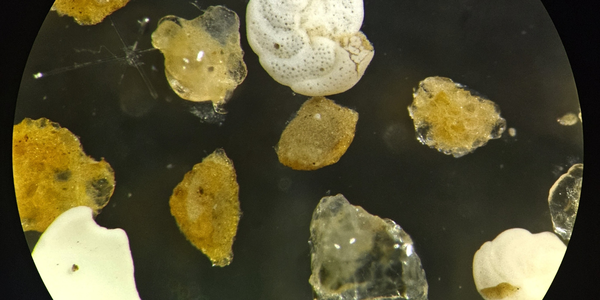
Once in the lab, Josefina Johannsoen (IMR Tromsø, Benthic Communities) and Èric sorted a few of the largest individuals of the most representative taxa in the remaining content of the 300 µm sieve, while Marlene Pinheiro (CIIMAR/CIMAR-LA, Portugal) started photographing and documenting the bones with enthusiasm.
Although it is hard to say which species of whale we are dealing with until further inspection and processing in the lab, we believe that we dug parts of a toothed whale, including two ear bones, several teeth and other bone parts. This has been confirmed on land by Lotta Lindblom, from the Marine Mammals Group, at IMR in Tromsø.
Èric started looking closely at the two dominant polychaetes, commonly known as bristle worms. Using taxonomic keys, he determined that the capitellid worms that we saw crawling among the black sediment in the video footage were individuals from the genus Notomastus sp. Tom Alvestad and Jon Anders Kongsrud (University Museum of Bergen, UMB), who were contacted for their expertise, suggested that this could be the same species that has been found in other chemosynthetic-based environments in the AMOR region; a species that is currently in the process of being formally described. However, this will only be confirmed after further detailed taxonomic and genetic analyses are carried out on land.
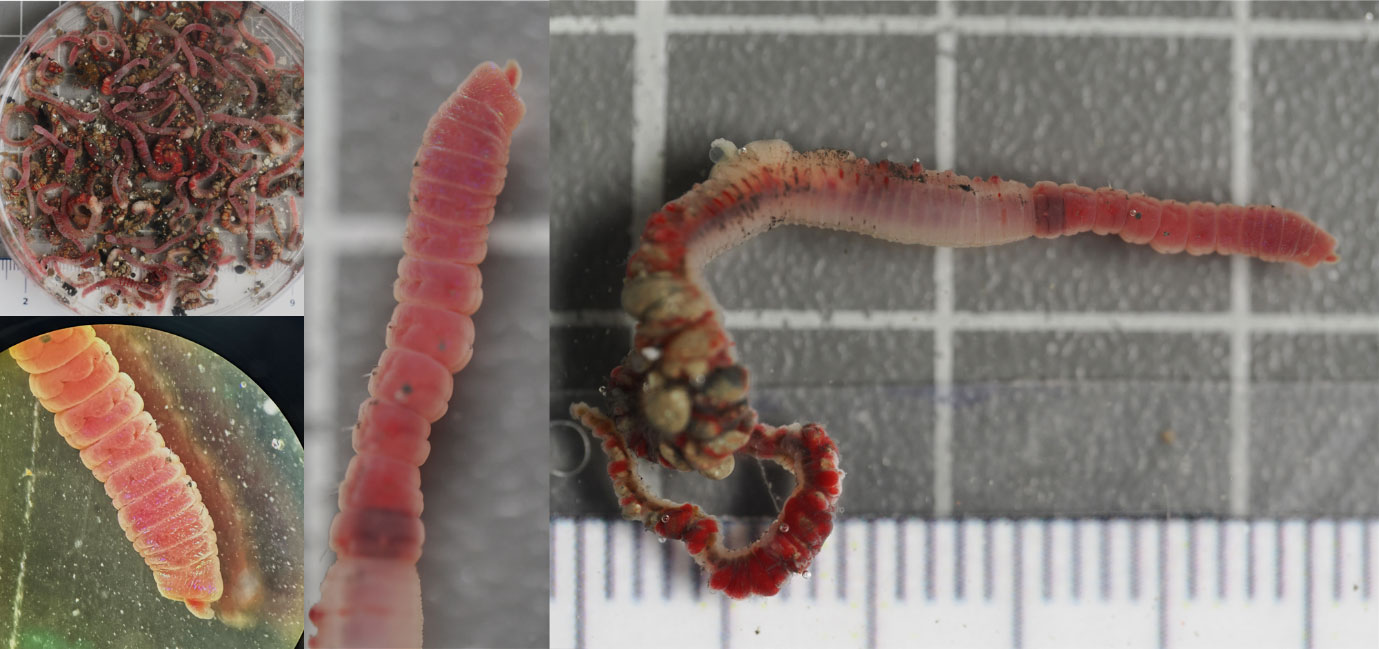
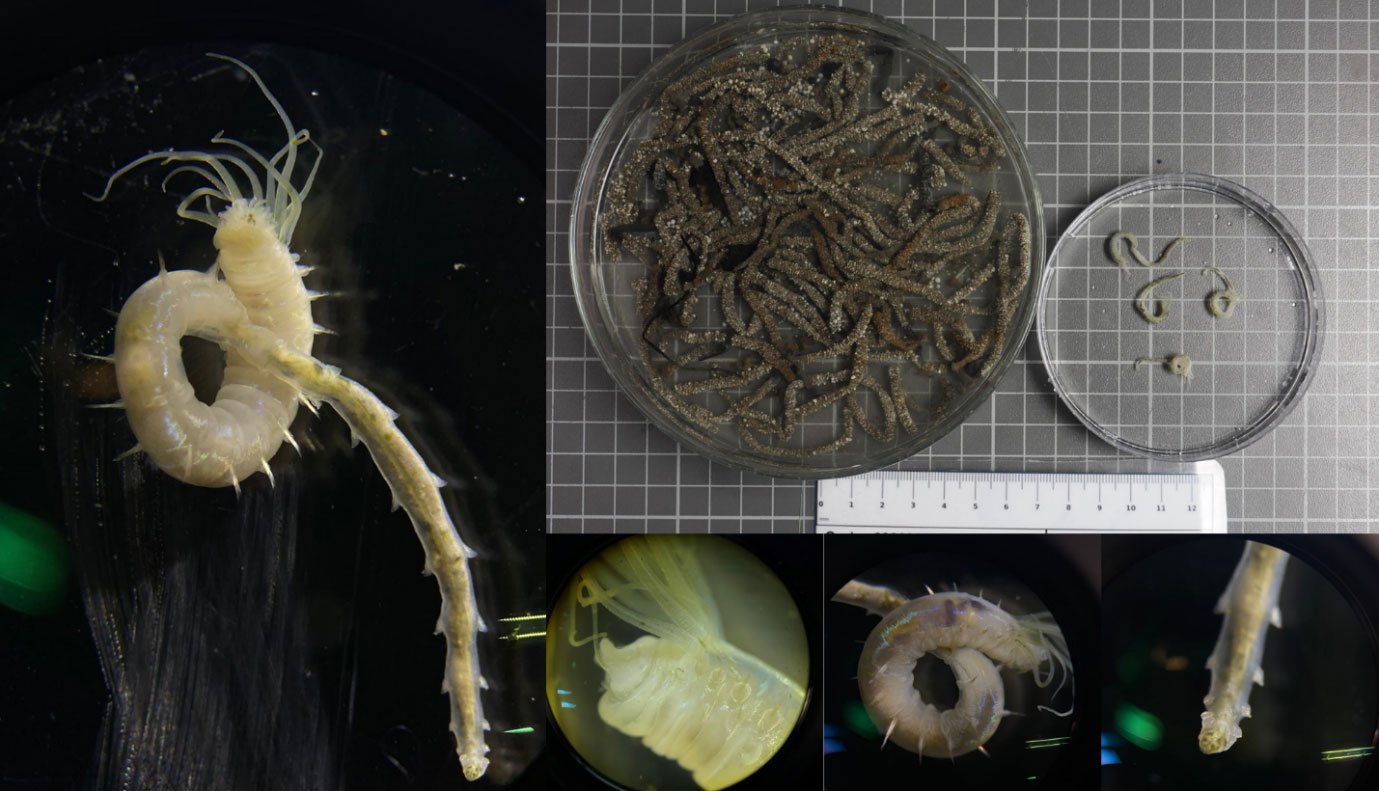
Regarding the tube-looking features that were observed on the footage, it was quickly apparent that they were indeed polychaete tubes. With surgical precision, we removed a few individuals from the tubes to look at them in more detail. They were polychaetes belonging to the Ampharetidae family. Although species-level identification proved challenging, expert input from Kongsrud and Alvestad (UMB) helped narrow them down to the genus Anobothrus. Intriguingly, they may represent as well an as-yet undescribed species, previously reported from hydrothermal vents and cold seeps in the region.
Further taxonomic and molecular analyses will be needed to confirm whether these specimens match the only individual collected so far, in 2015; a still undescribed species known as Anobothrus sp. nov. (Elirtsen et al., 2024). The fact that more than ten individuals were found within the sampled patch suggests that this species may have an extremely patchy distribution and could rely on chemosynthetic environments for both survival and dispersal.
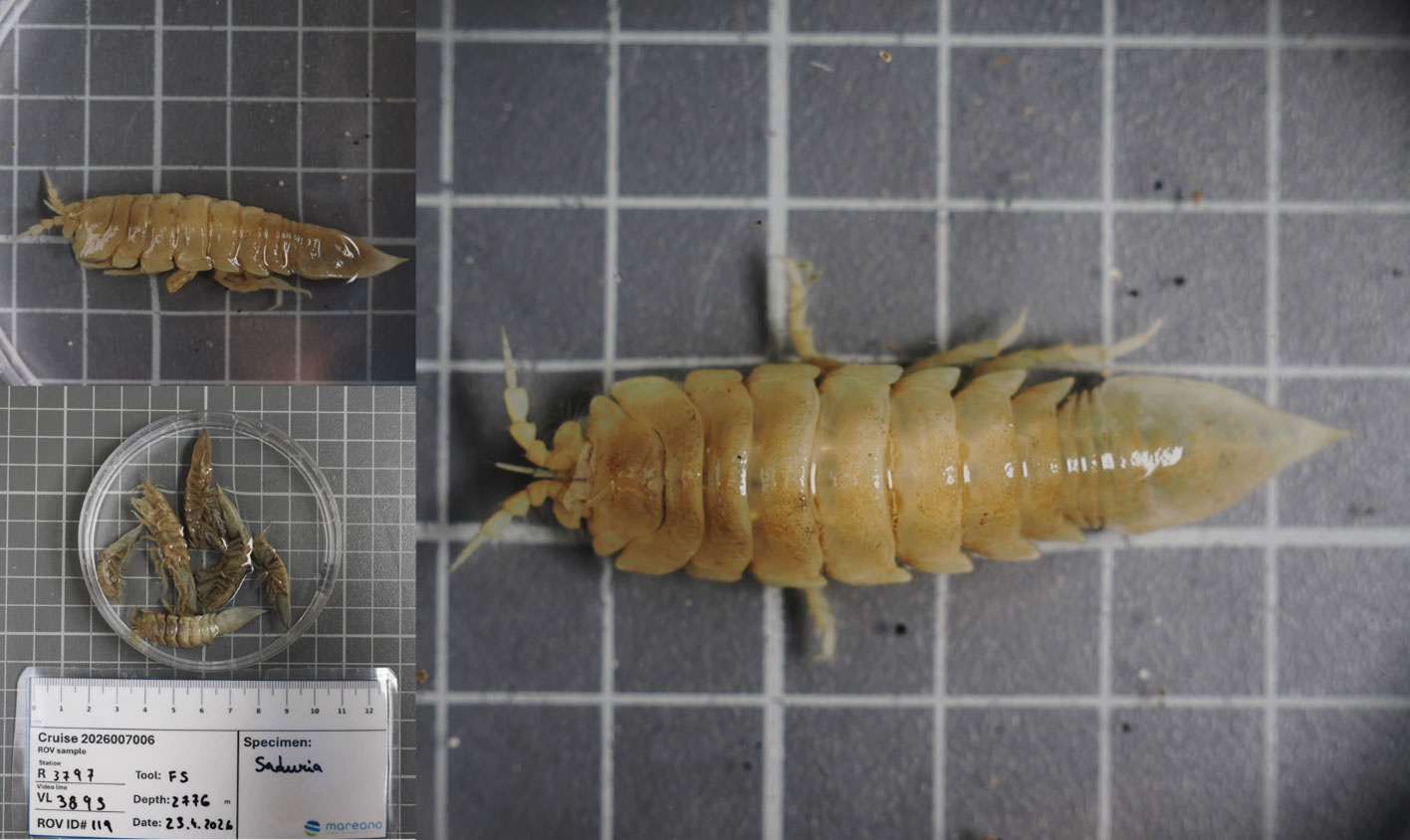
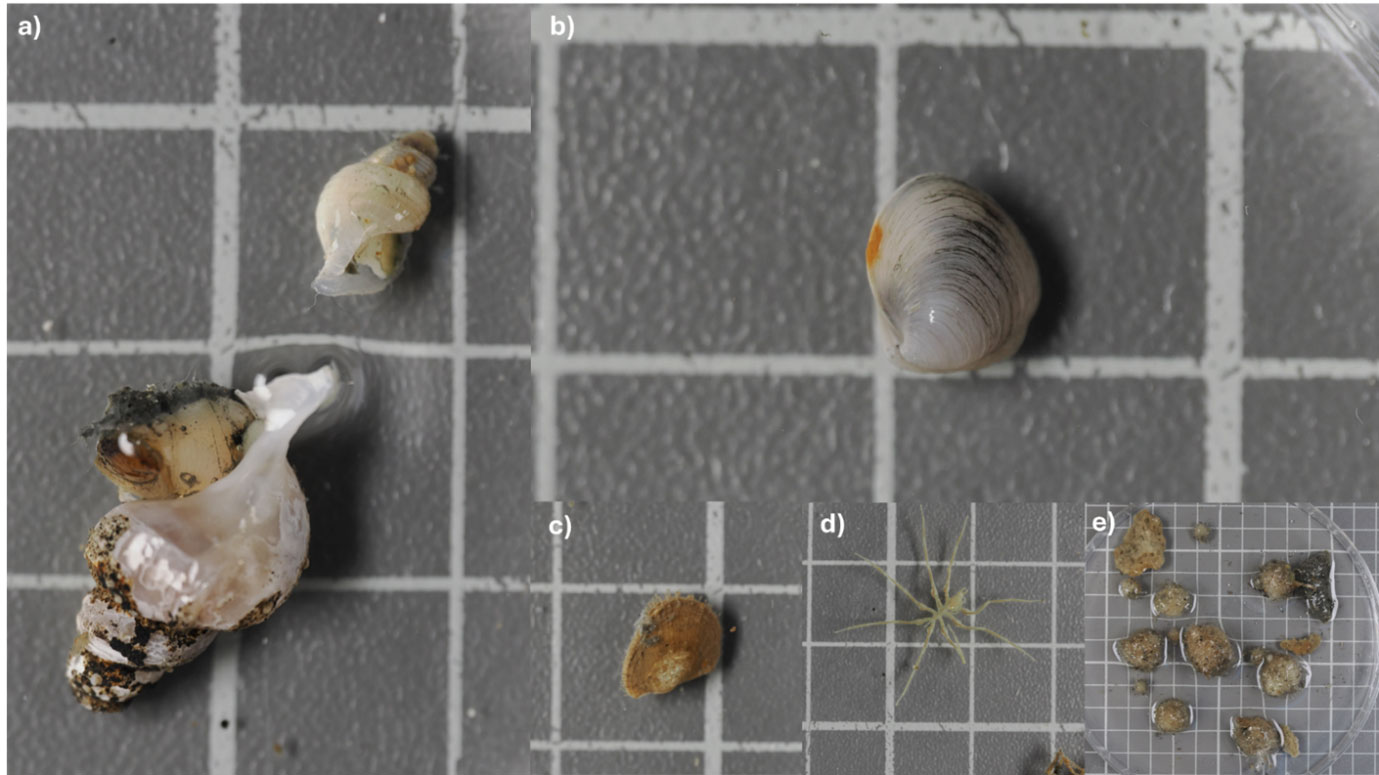
Other associated fauna on the sampled patch were individuals of the large isopod Saduria sp., well known as scavengers and predators and likely feeding on whatever was left from the whale remains. We also recovered a bivalve from the family Thyasiridae, specifically from the genus Thyasira as confirmed by Andrey Voronkov (IMR Tromsø, Bunnsammfunn). This family of bivalves is typically found in low-oxygen sediments, and some species are known to have symbiotic sulphur-oxidizing bacteria on their gills as a source of extra energy. Finally, we also documented two Buccinidae gastropods and one Bathyarca sp. (both confirmed by Andrey Voronkov), together with some pycnogonids and porifera.
Taken together, these observations serve as a powerful reminder that even seemingly unremarkable deep-sea landscapes can occasionally host extraordinary events such as whale falls. These rare inputs of organic matter sustain highly specialized and often transient communities, whose dispersal, distribution, ecological roles, and connectivity across the deep ocean remain largely unexplored.