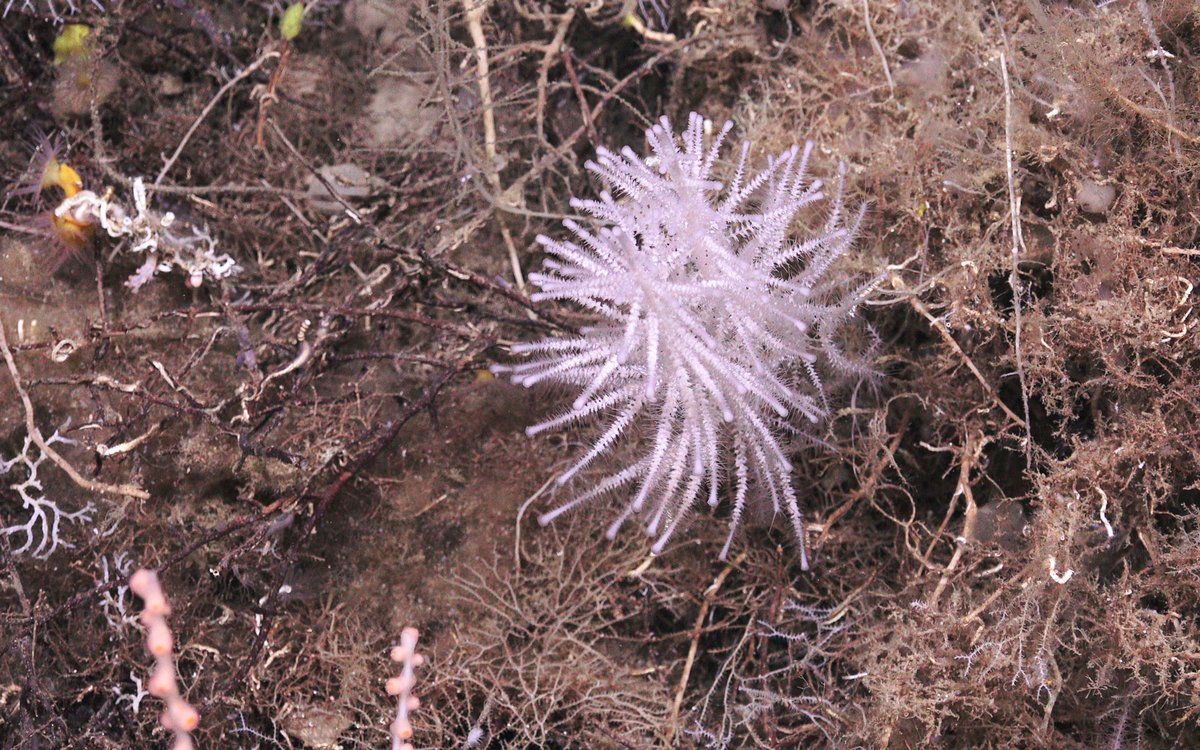
Bushy white carnivorous sponge (Cladorhiza sp.) found on bamboo coral framework at 1000 m.
Photo: Mareano / Havforskningsinstituttet (filmet med Ægir6000/NORMAR)
Bushy white carnivorous sponge (Cladorhiza sp.) found on bamboo coral framework at 1000 m.
Photo: Mareano / Havforskningsinstituttet (filmet med Ægir6000/NORMAR)Published: 27.05.2026
Sponges at the bottom of the sea are long-living, slow-growing animals that (mainly) survive by filtering the water that surrounds them (although there are some that are carnivorous, but we’ll get to that later). Forget the image of the famous rectangular kitchen sponge: sponges in the sea do not have a distinct shape or size. Some can be small, smooth and round, while others can be large, bumpy, and live on a stalk, but these are only a fraction of the possible shapes and sizes sponges can take.
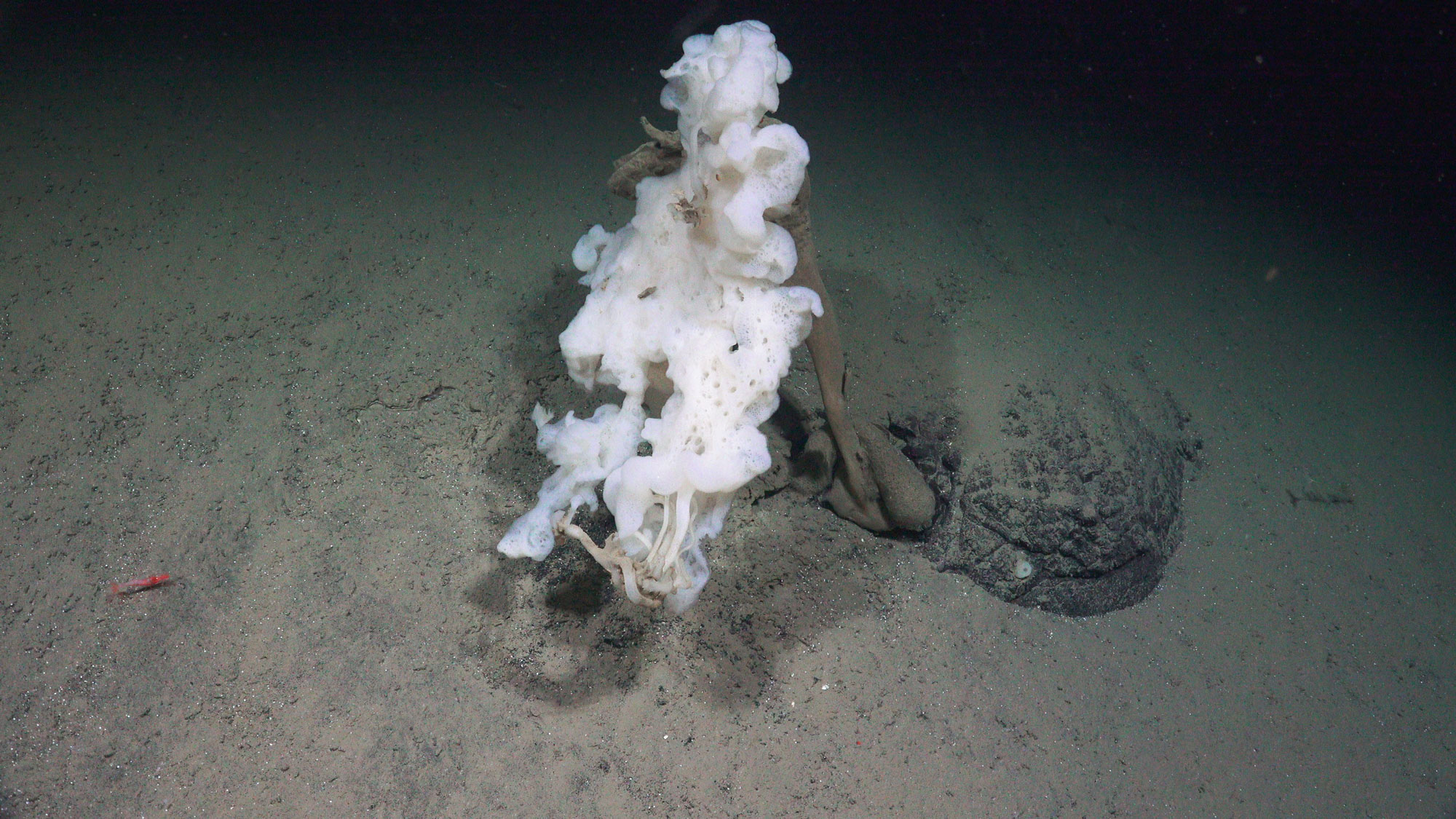
Sometimes a species can change shape so much when it comes out of the water that it is nearly impossible to recognise it as the individual that was collected. A good example is the small sponge Tentorium semisuberites (see picture below).
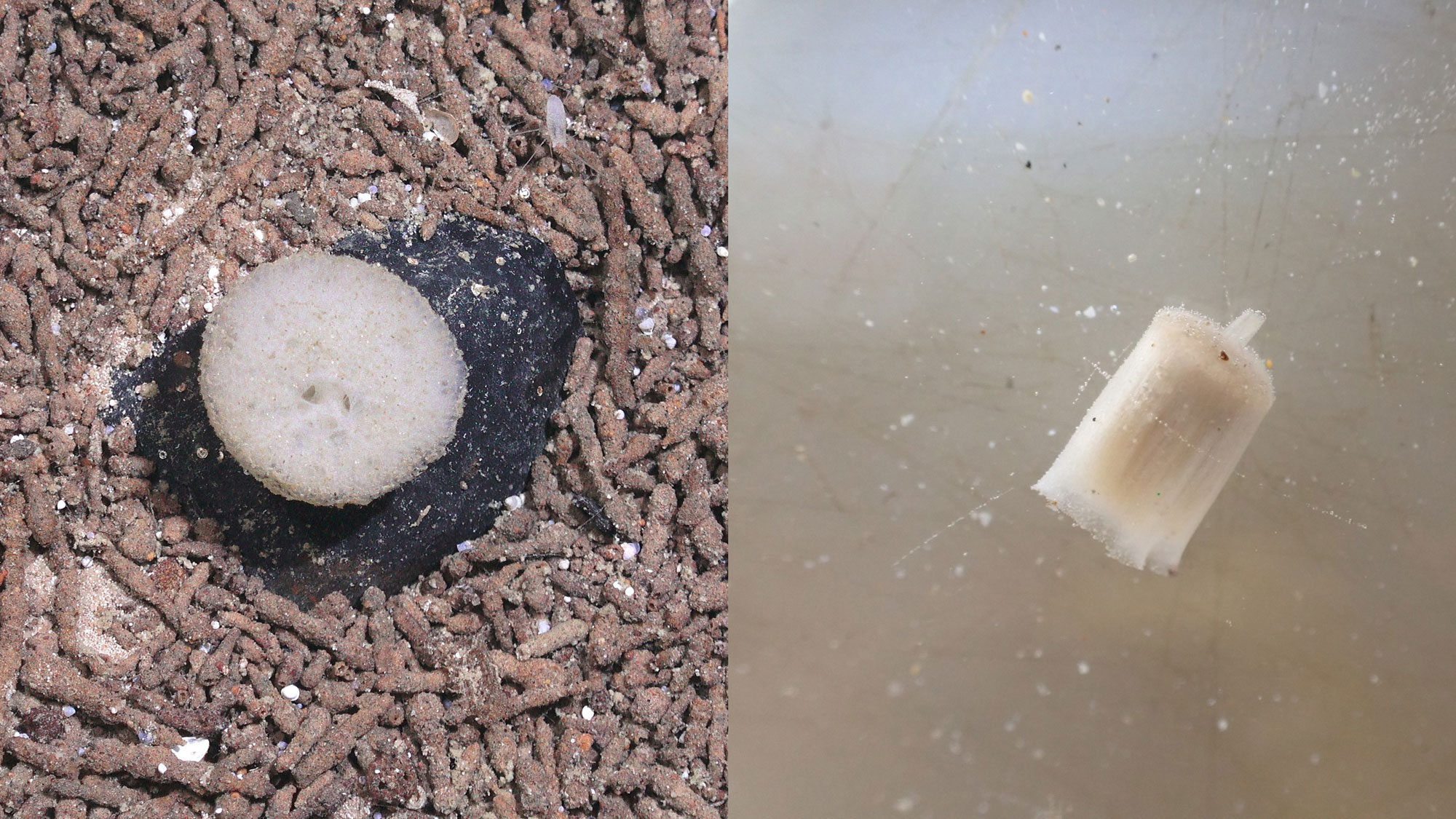
Some species can look nearly identical and occur right next to one another. Unless one knows exactly what they are looking for, it can be easy to mistake their identities for one another. This is the case for the arctic sponge ground-forming sponges, Geodia parva and Stelletta rhaphidiophora.
Other sponges are so difficult to identify, even when physically collected, that it requires special expertise and knowledge to separate species, such as the large tube-shaped glass sponges Schaudinnia rosea, Trichasterina borealis, and Scyphidium septentrionale. The best way to identify sponges is by looking at their spicules under a microscope while also barcoding their DNA to strengthen the identification!
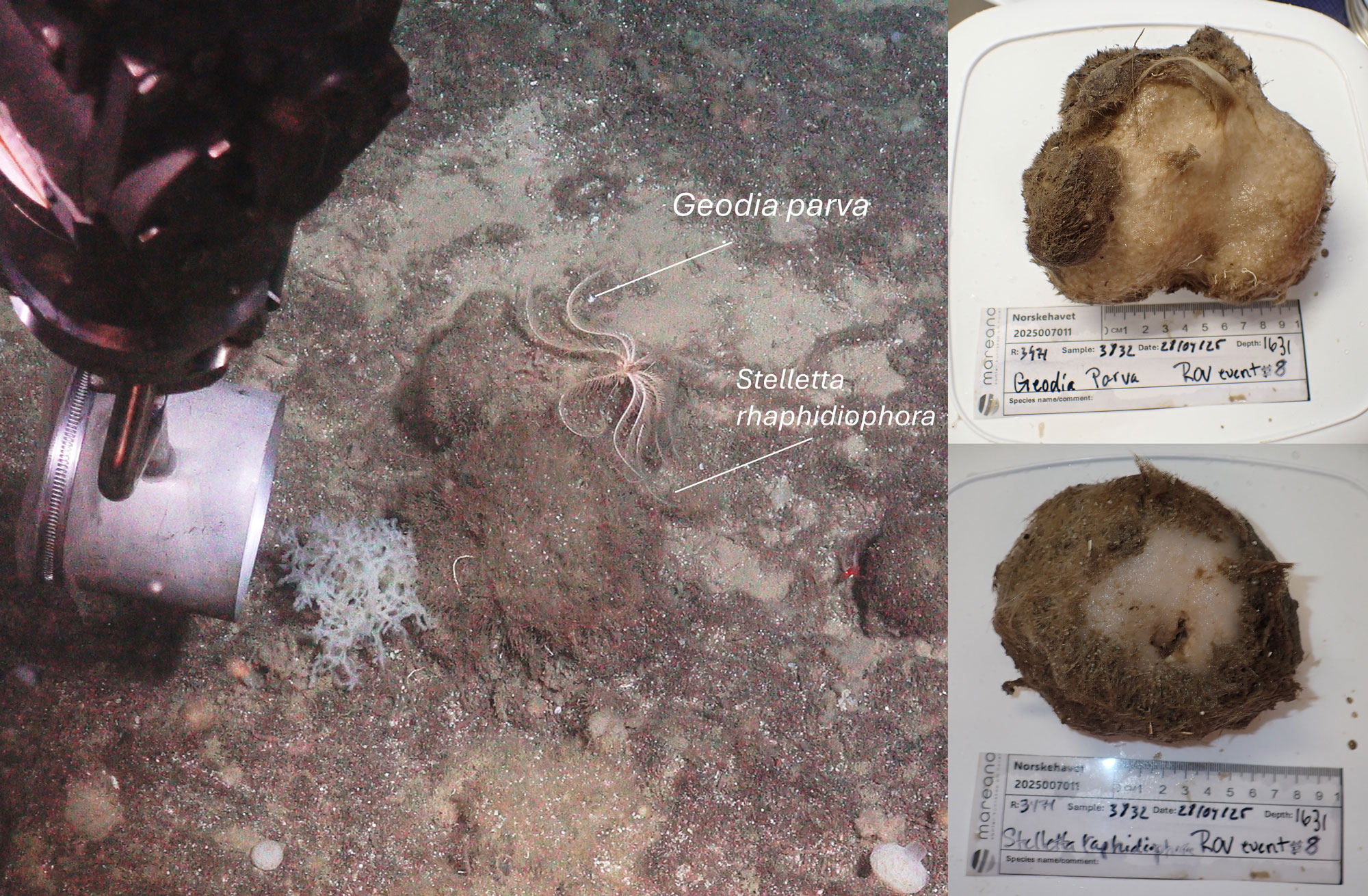
Some sponges even form dense sponge habitats known as sponge grounds, where they create 3D structures that provide a place for other animals to live. These sponge grounds tend to be known as biodiversity hotspots, and they have been seen in the deepest of basins to steep bedrock walls to at the peak of seamount summits.
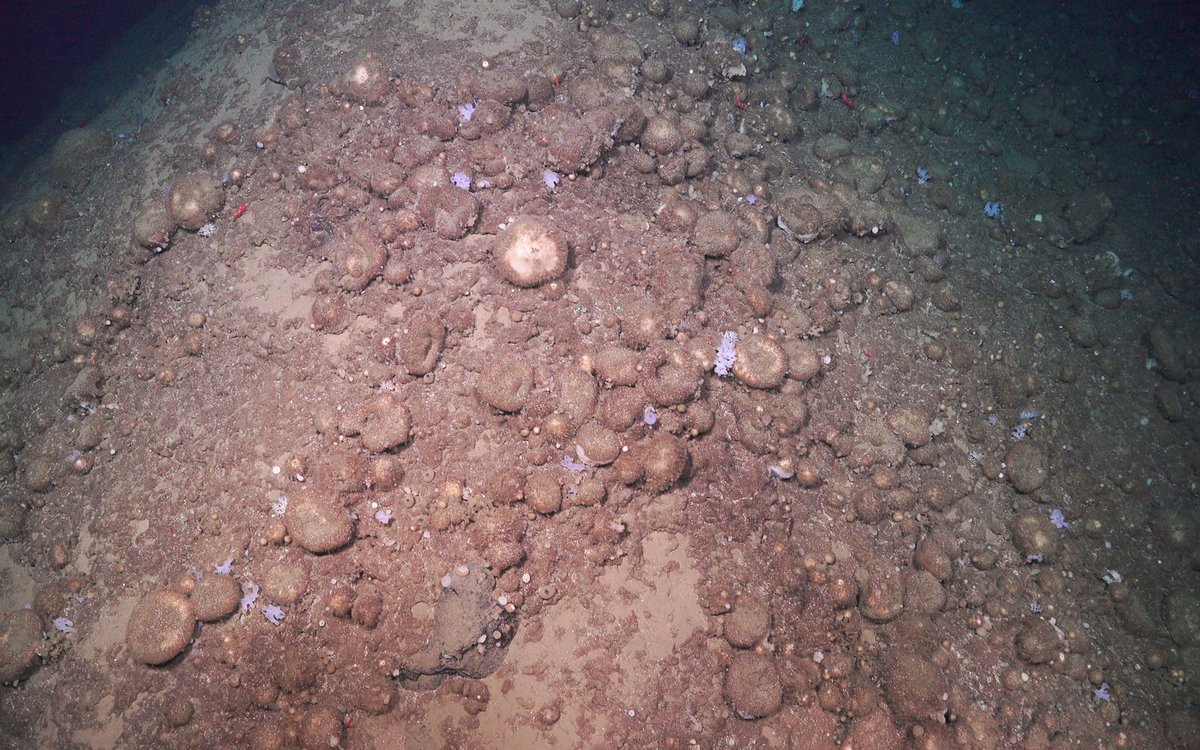
A dense sponge ground made up of large sponges - Geodia and Stelletta - on top of a spicule mat-covered ridge crest.
Photo: Mareano / Havforskningsinstituttet (filmet med Ægir6000/NORMAR)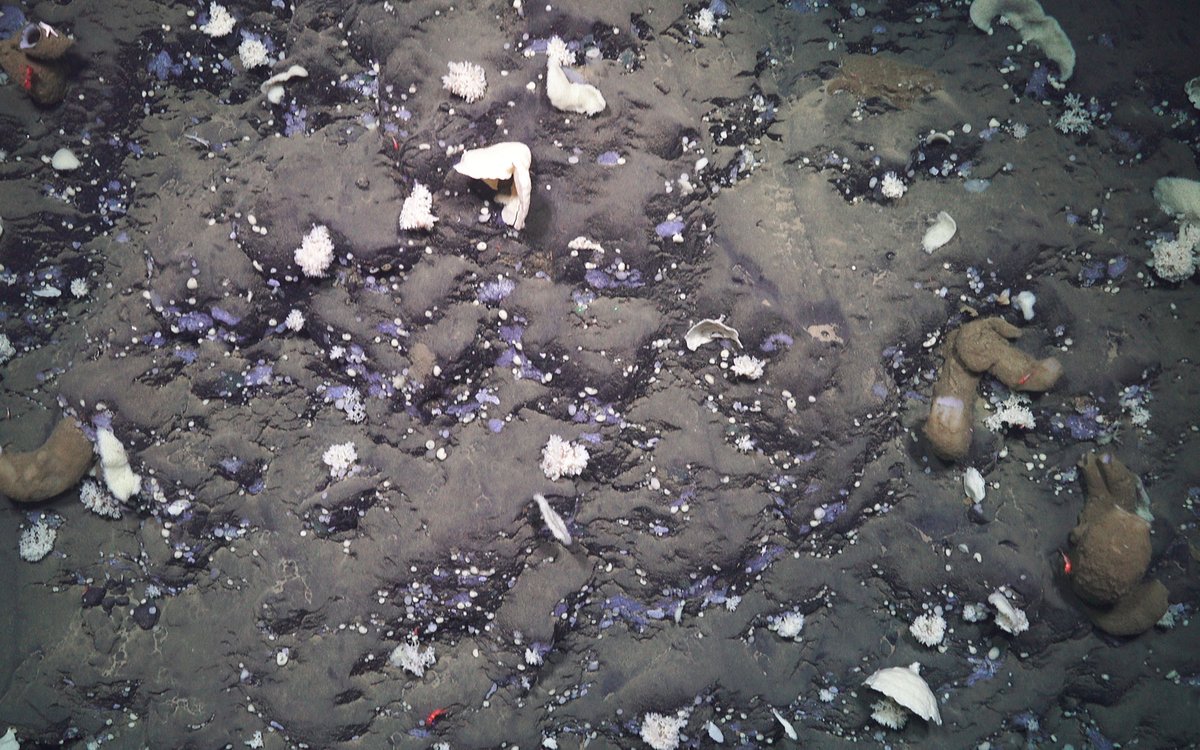
Bushy, encrusting, and fan-shaped sponges with large tube-shaped glass sponges – Asconema megaatrialia – growing on a bedrock wall at 2780 m deep.
Photo: Mareano / Havforskningsinstituttet (filmet med Ægir6000/NORMAR)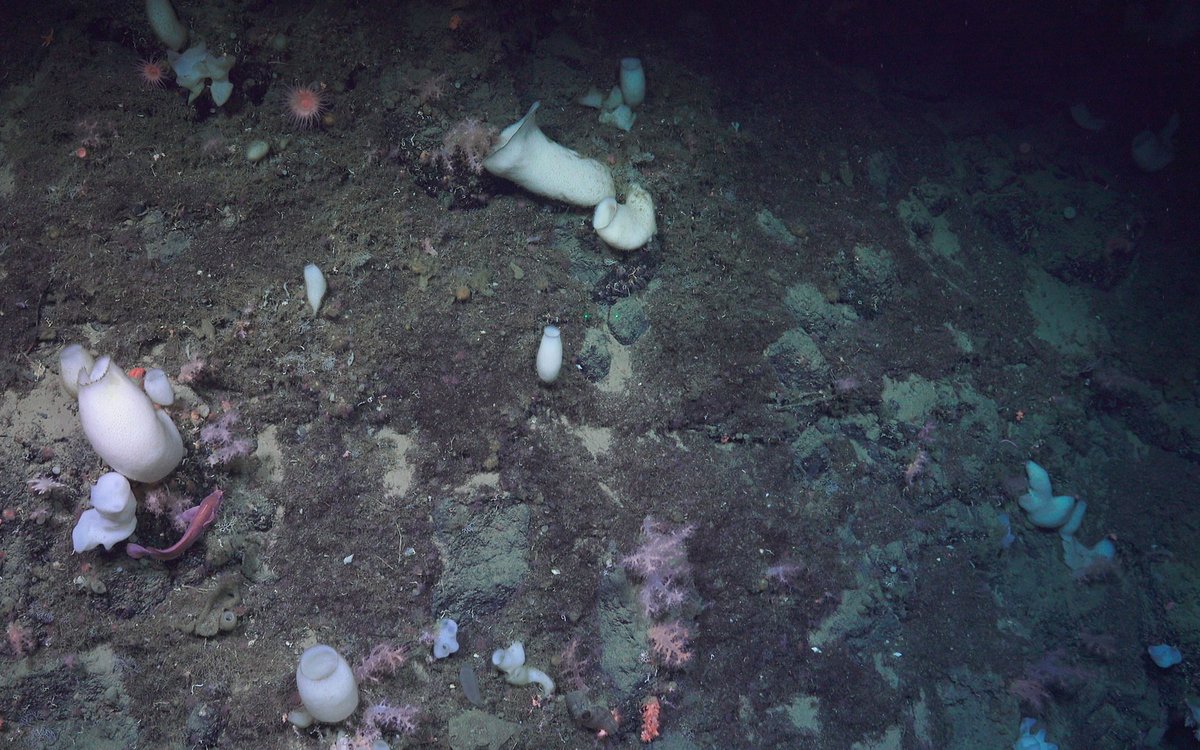
A glass sponge garden with fish, soft, corals and other sponges growing on spicule mat at 1075 m.
Photo: Mareano / Havforskningsinstituttet (filmet med Ægir6000/NORMAR)Remember we mentioned carnivorous sponges? While many of the sponges we see filter the water for food to eat, some sponges are carnivorous and have modified body shapes. Those tend to have little “barbs” to catch their prey, like small crustaceans. Once the prey has been captured, they start to engulf it, breaking it down with enzymes so they can consume it.
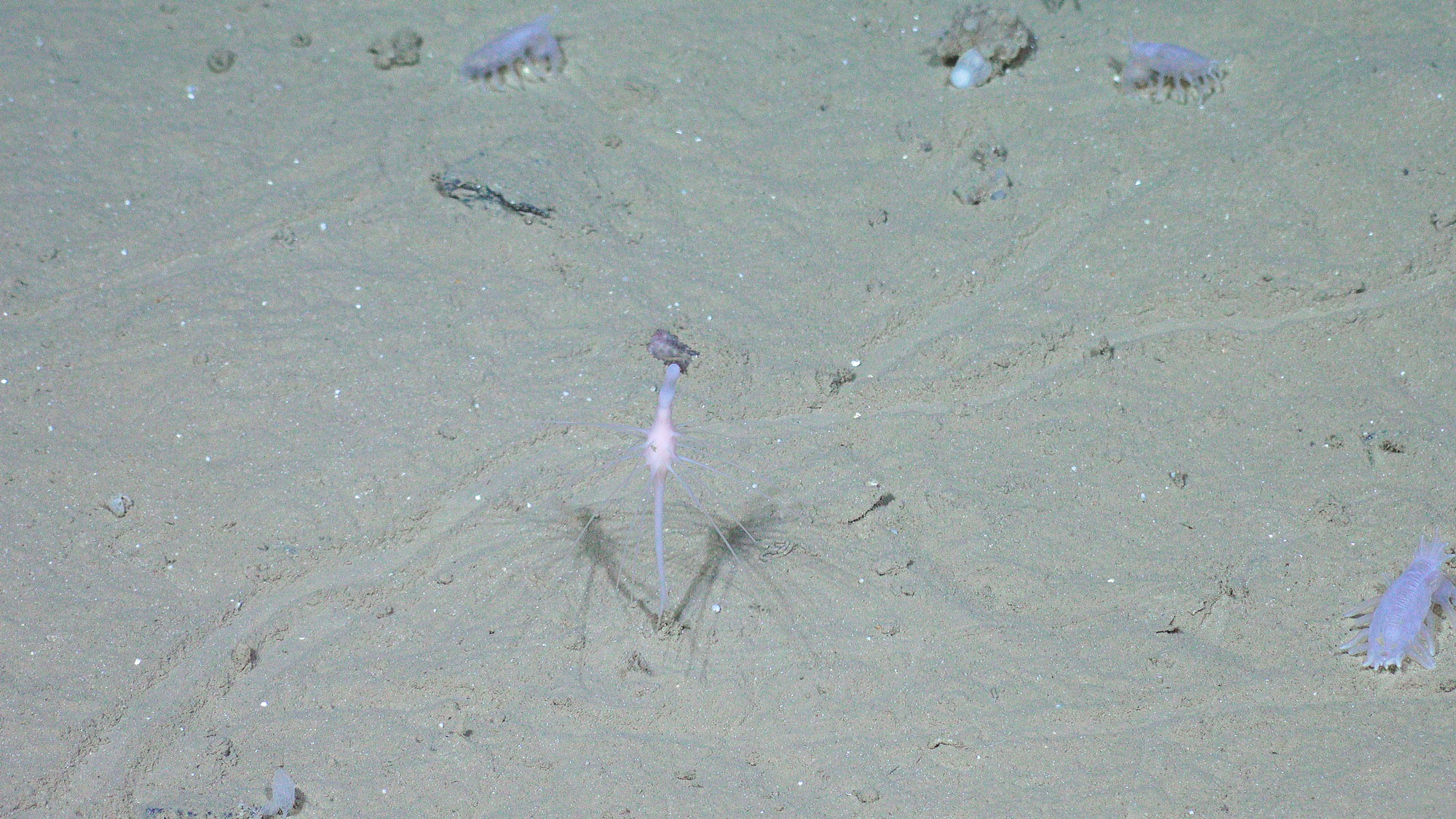
Svamper er fascinerende organismer som ikke bare finnes over hele Den arktiske midthavsryggen, men i alle havområder og vanntyper verden over. Eksemplene vi har vist i denne saken er bare et lite innblikk i svampenes komplekse og spennende verden. Vi gleder oss til å lære enda mer om dem!