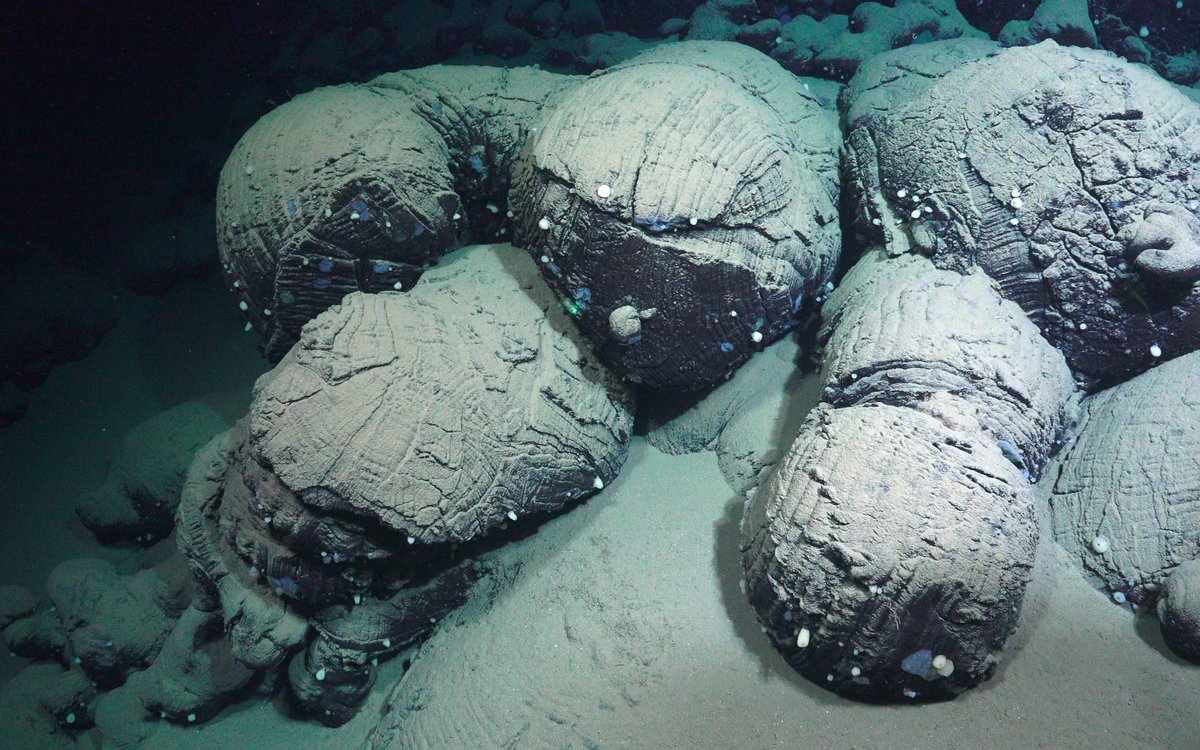
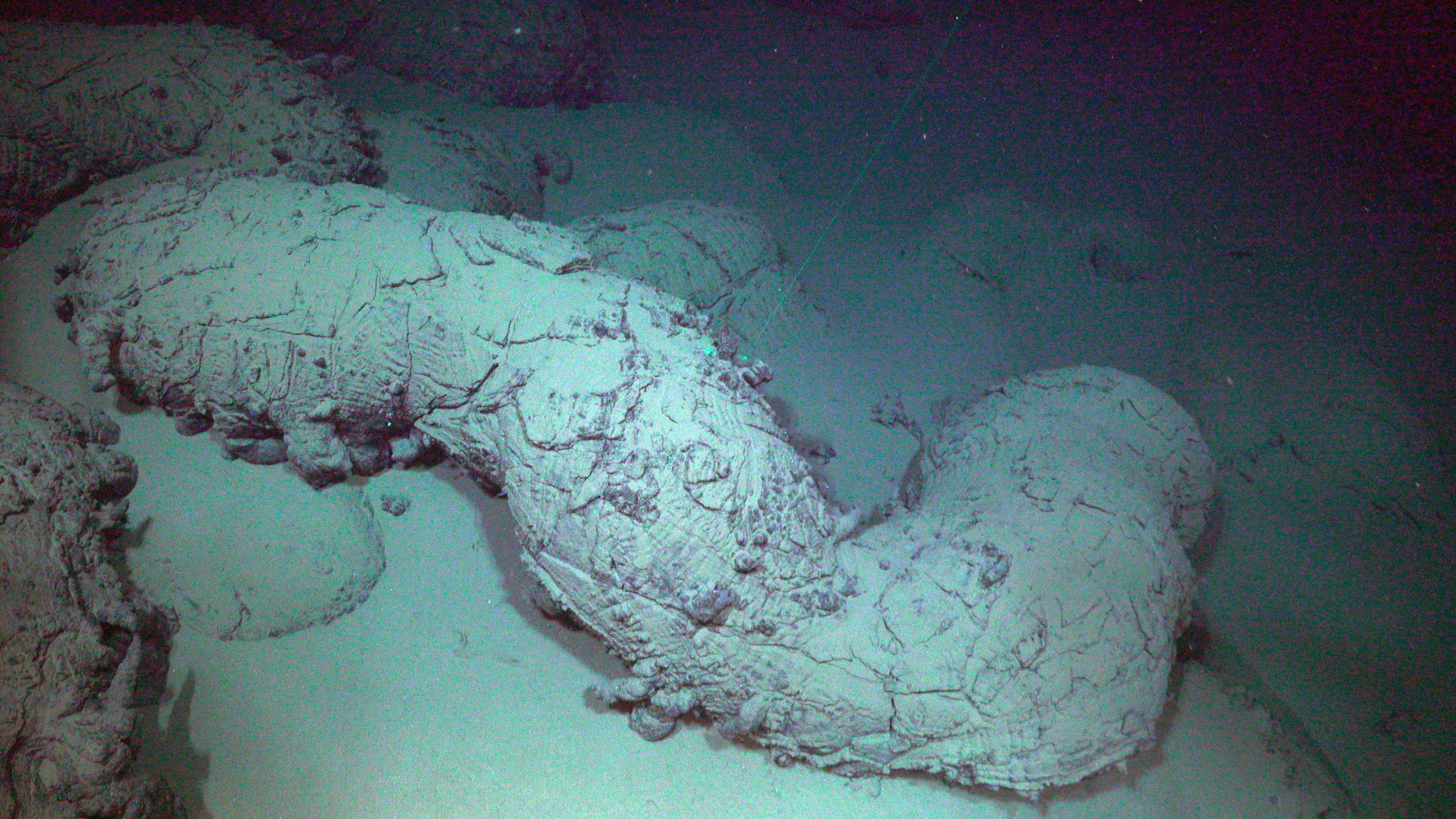
Pillow basalts are the most common volcanic rocks to form under water. Their shapes can make your imagination run wild. Photo: MAREANO / HI (Filmed with ROV Ægir6000 / NORMAR).
Pillow basalts are the most common volcanic rocks to form under water. Their shapes can make your imagination run wild. Photo: MAREANO / HI (Filmed with ROV Ægir6000 / NORMAR).
Published: 06.11.2025 Updated: 27.12.2025
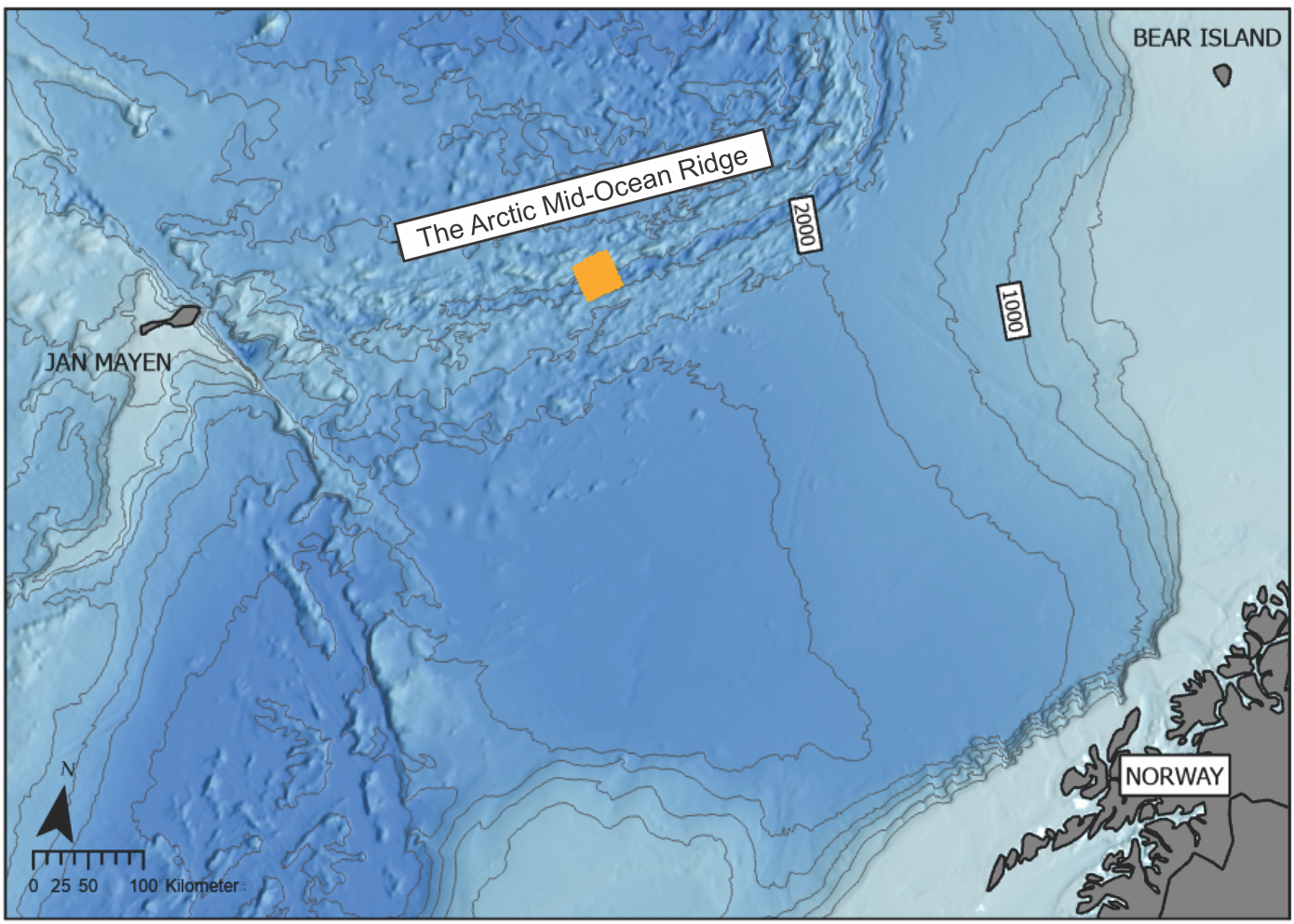
Along this rift-valley, new seafloor forms as erupting lava rapidly cools upon contact with the cold Norwegian Sea Deep Water, creating exciting shapes for us to examine during our deep-sea dives with the ROV Ægir6000 / NORMAR.
The shape, texture and structure of volcanic rocks can give us important insight about the gas content and mineral composition of the lava it originated from and the environment in which they were shaped and formed. Basaltic lava with a lot of gas called ‘a’ā lava, tends to form rocks with a rough surface and a lot of holes or air pockets called vesicles, indicating that gas bubbles did not have the time to escape before it cooled. Smooth basaltic lava called rope lava or Pa hoe hoe, on the other hand forms due to its low gas content, reduced viscosity and increased temperature compared to the ‘a’ā lava. When lava erupts under water, fun shapes such as bulbous pillows are formed - called pillow basalts.
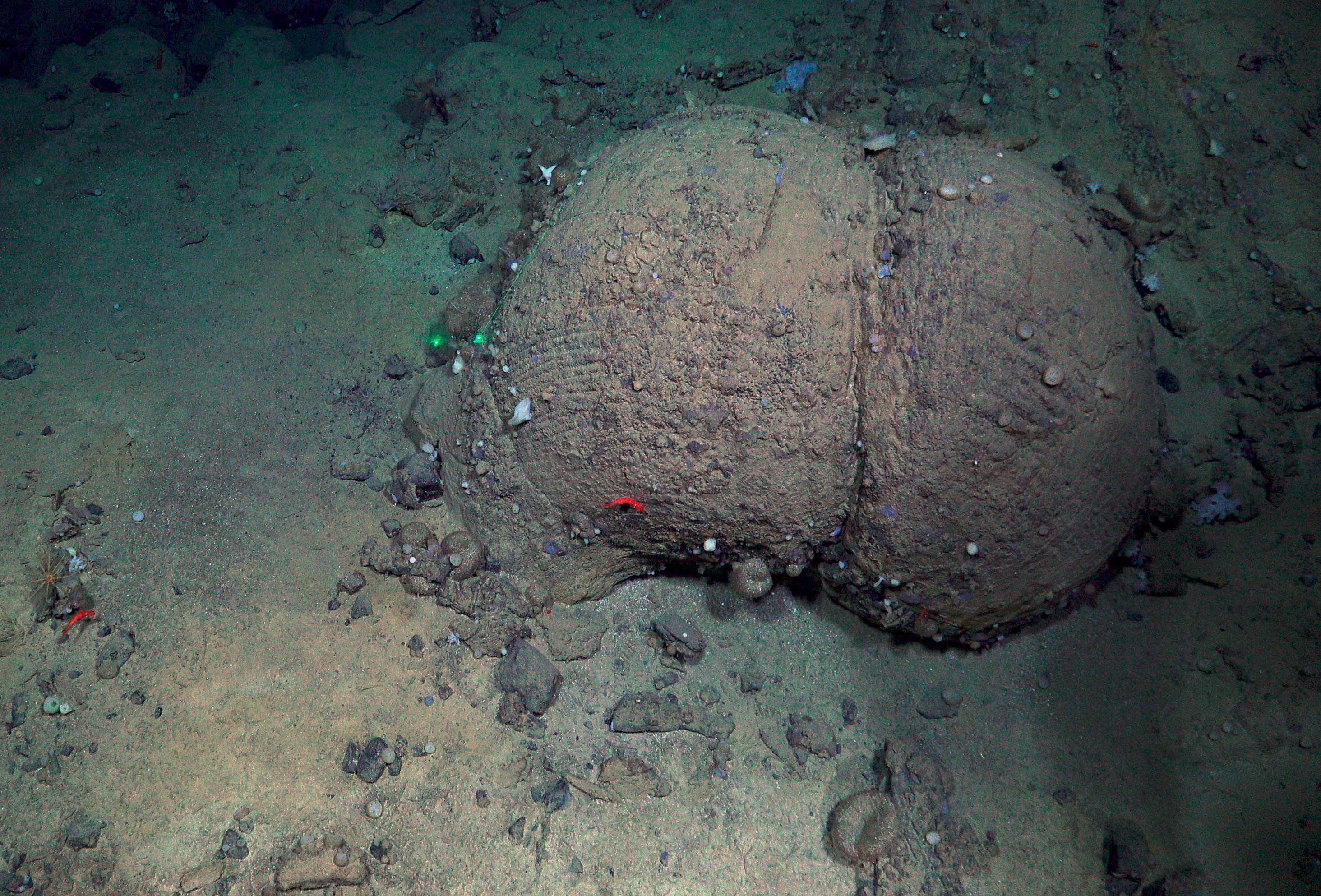
The pillows form as the outer layer of a lava flow cools and almost instantaneously lithify upon contact with the cold surrounding water. The outburst of lava continues to expand the pillows as more lava fills them up, still being molten inside. If the volume of the internal lava exceeds the size of the pillow, the increased pressure cracks the outer layer and a new lobe of lava extrudes, forming another pillow next to it. This may continue until the lava flow ceases or finds a better exit that is easier to break through. This way, several pillows may be created in a row, forming elongated tubes of basalt.
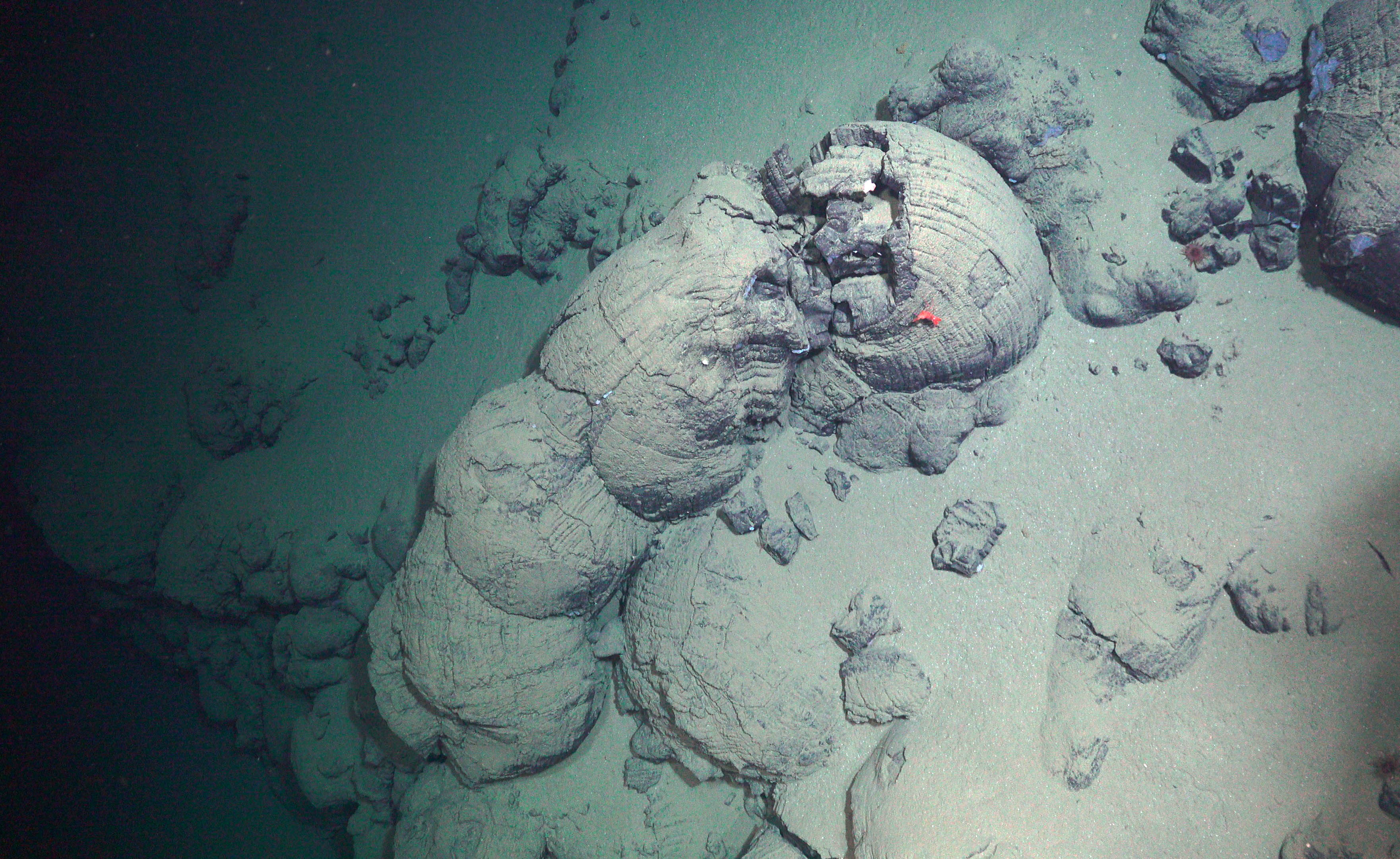
The pillows often break after formation due to their weight and their brittle glassy crust, leaving rubbles of broken pillows and nice radial structures on their broken surfaces. Altogether, the shapes of the pillow basalts amaze and amuse the researchers logging the seabed, making us imagine food, animals and other shapes on the surface below this deep ocean.
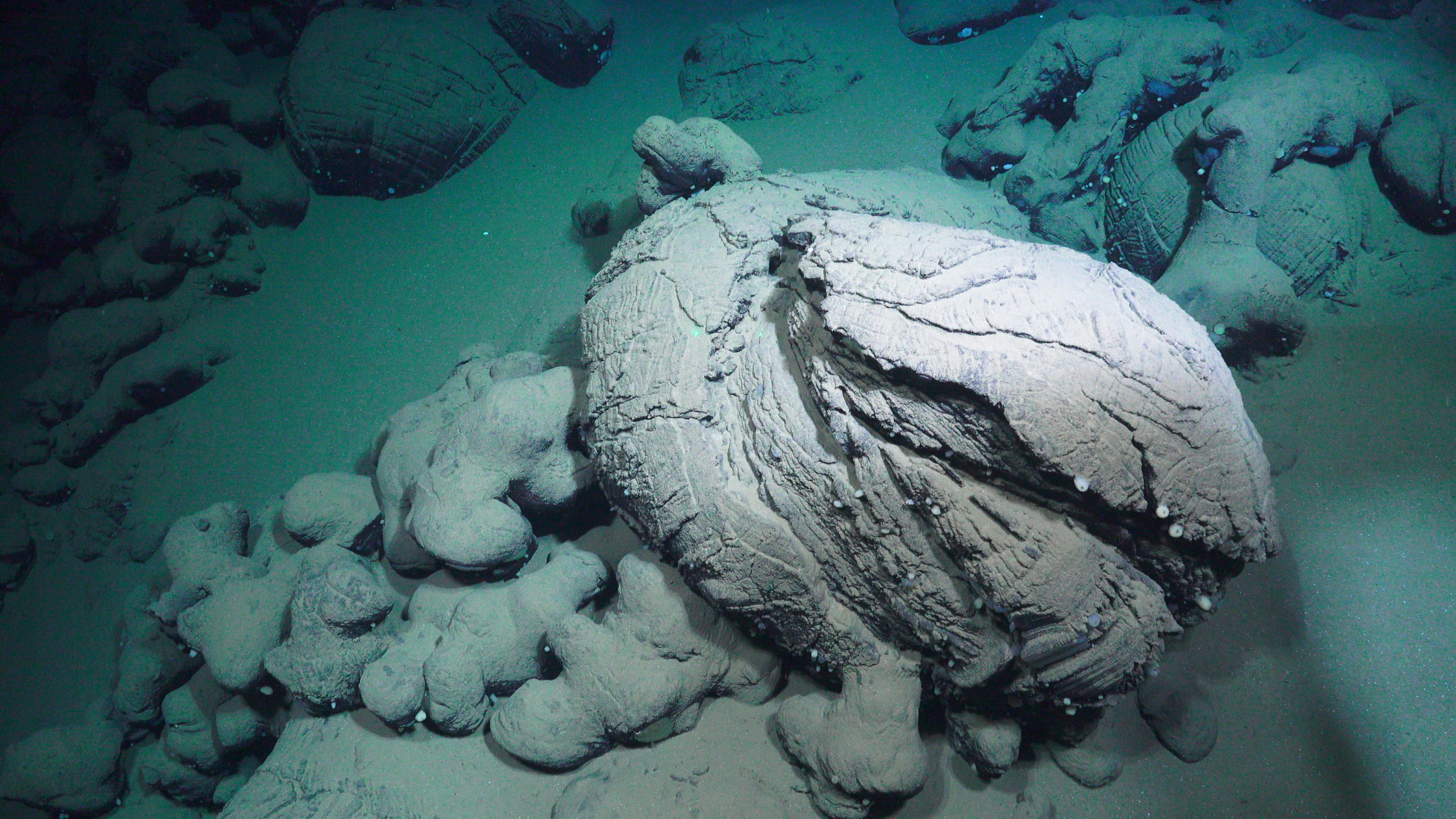
Check out the following pictures and see if you agree with our suggestions for figurative resemblances. What do you see? Our suggestions include coco de mer, brain, bread, snake, turtle, dinosaurs, hippopotamus, dragon, parrot, elephant, goat, rabbit and sheep. Pareidolia is the term for recognizing faces or known shapes in nature.
What do you perceive this billow basalt from 3000 m water depth to look like?
Photo: MAREANO / HI (Filmed with ROV Ægir6000 / NORMAR).
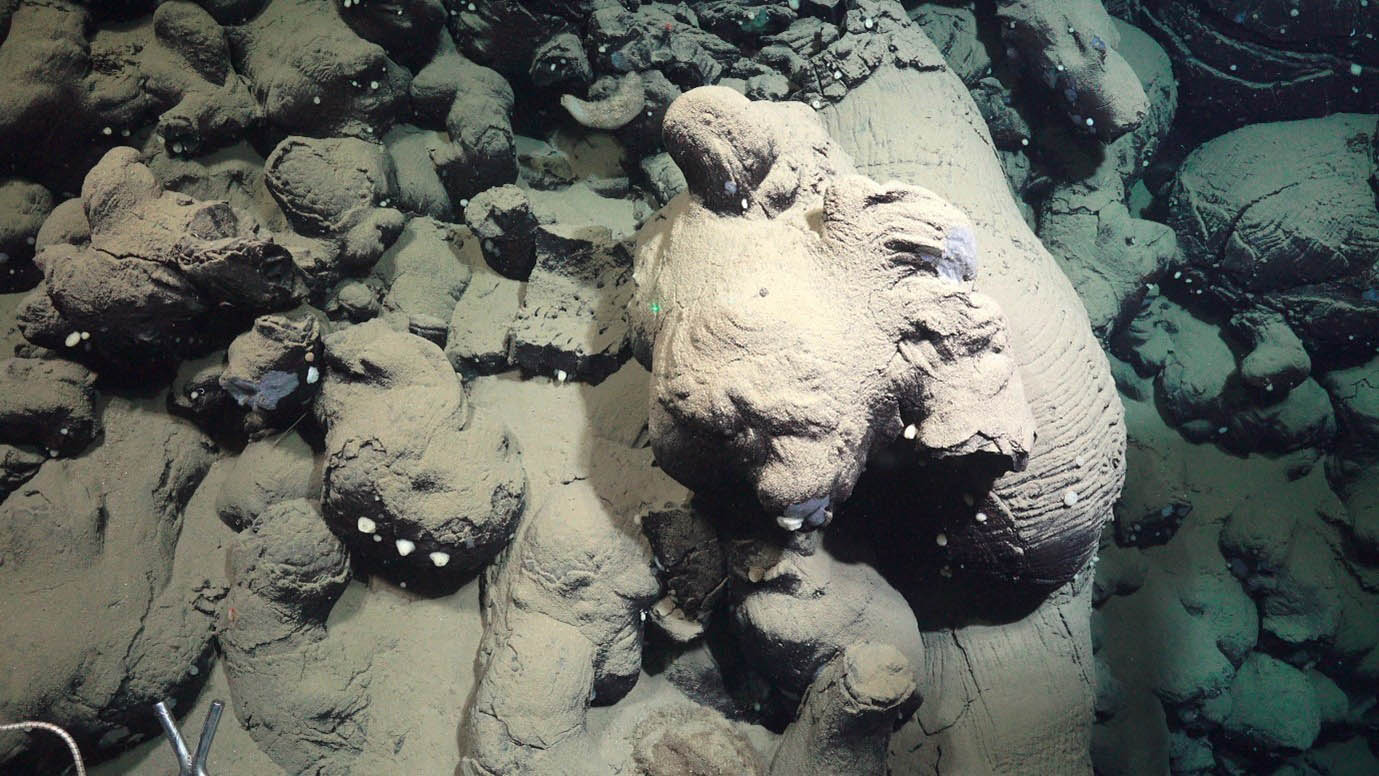
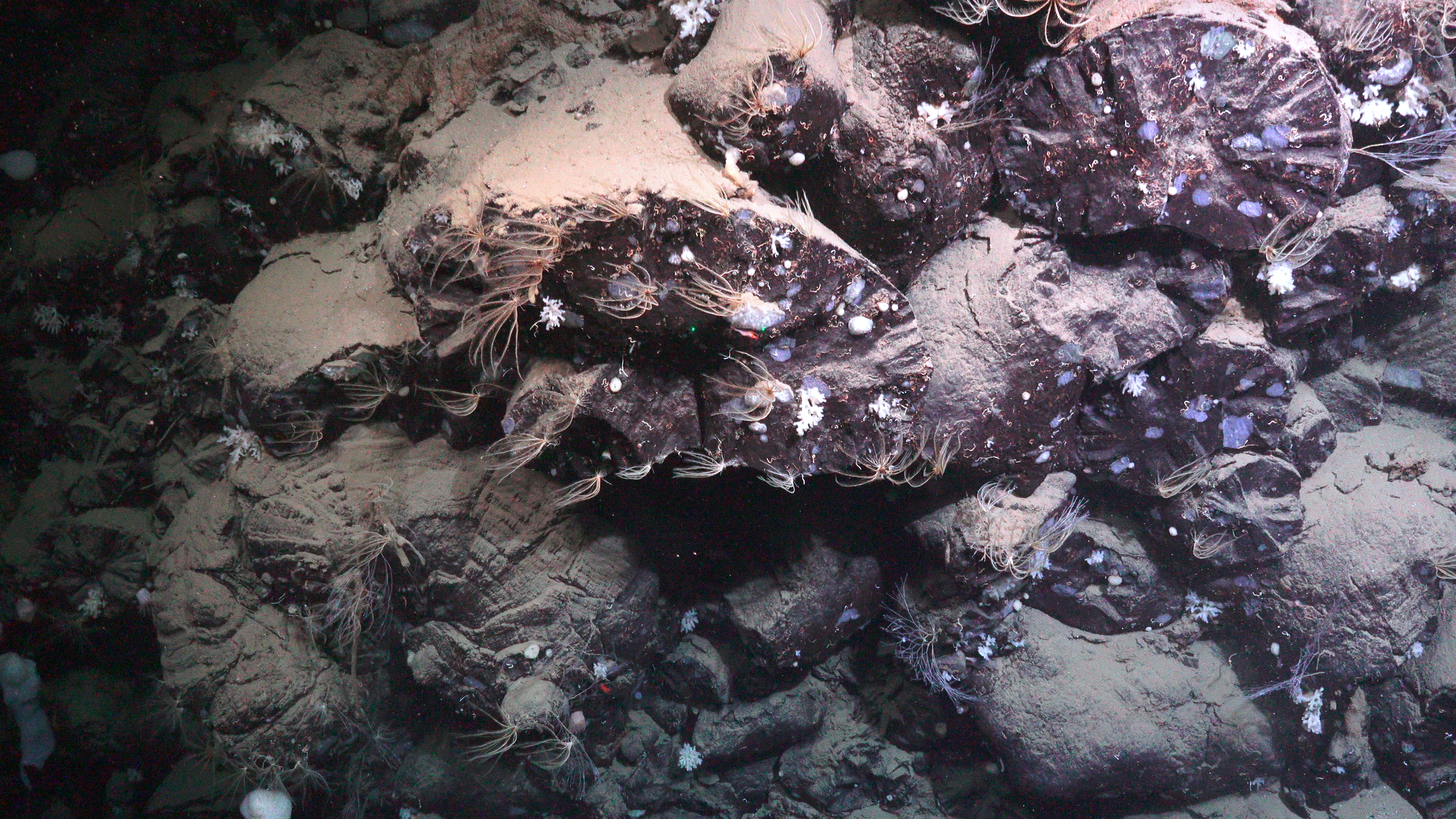
This is not the first time pillow basalts have been documented with videos along the Arctic Mid-Ocean Ridge, but it is the first time the MAREANO programme has gone here to make maps of the biological habitats and biology around the active spreading ridge.
On the mainland of Norway, you can check out deformed pillow basalts in Trondheim, Lyngen (Troms), Kirkenes and around Bergen. In addition, these can be found several other places around the earth, like on Iceland, Svalbard, Vancouver Island, Oman and California. All of these have formed along mid-ocean ridges and were later brought on land by plate tectonics, providing evidence of ancient plate collisions. The exception is on Iceland, where pillow basalts have formed below glacial ice. In Norway, the pillow basalts originate from an ancient ocean floor that collided with the European continental plate to form the Scandinavian Caledonides, hence the pillow basalts have partly deformed to greenstone through metamorphism. The Atlantic Ocean opened up a lot later, and is still ongoing today.