Results
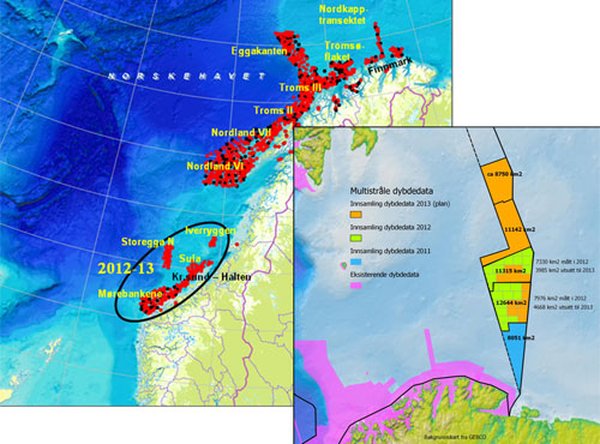
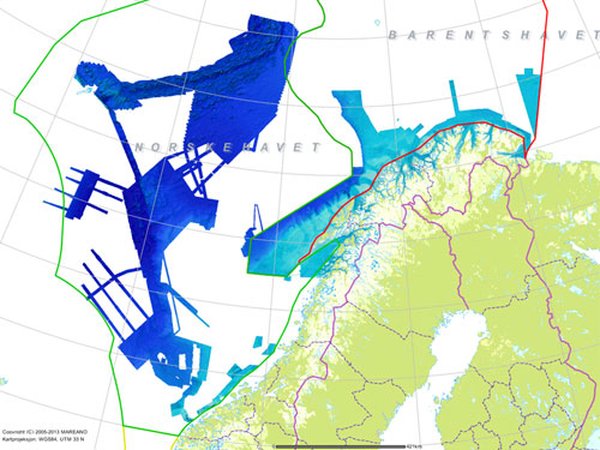
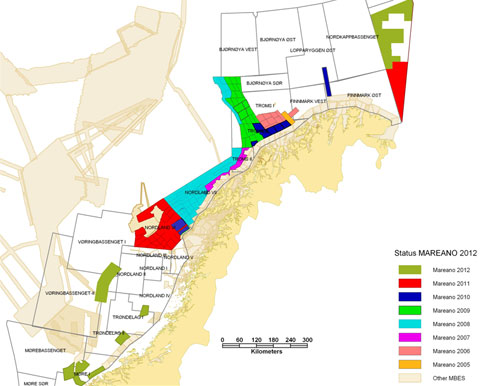
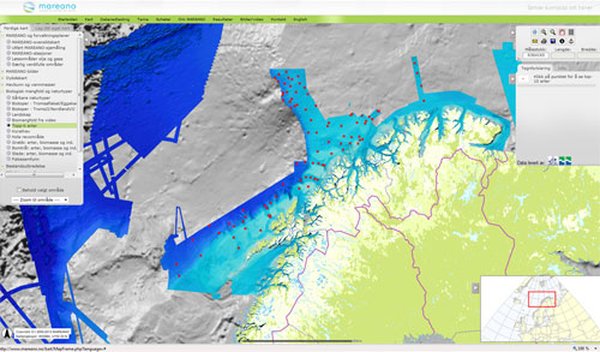
Since the start of the project in 2005, MAREANO has been mapping the prioritised areas Nordland VII, Troms II, Eggakanten and parts of Tromsøflaket. First the Norwegian Hydrographic Service has taken detailed depth measurements to ascertain the appearance of the underwater landscapes. Based on that, the Institute of Marine Research and the Geological Survey of Norway have collected information about the bottom and the local fauna using video and a variety of sampling tools. The results are continuously made available as maps and place-specific information on www.mareano.no, as well as being incorporated in the annual reports of the monitoring group and technical forum for ecosystem-based management of the Barents Sea and the seas off Lofoten. Bathymetric chartsBathymetric charts of the whole of Troms II, Nordland VII, Eggakanten and parts of Troms III/ Tromsøflaket have been produced by the MAREANO programme. Existing data collected in the past by the Norwegian Defence Research Establishment, Norwegian Hydrographic Service and the oil industry has also been used. In total, an area of 51,646 km2 has been charted by the MAREANO project over the period 2005-2009 (see figure below), and bathymetric charts are constantly being produced and published on the MAREANO portal (www.mareano.no) and Norway Digital website (www.geonorge.no).
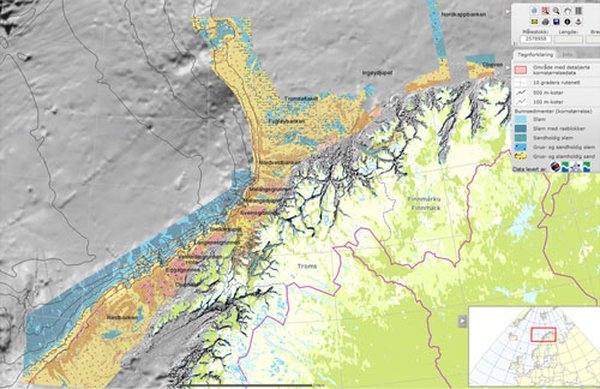
Seabed mapsSeabed maps containing information about sediments have been completed for Nordland VII, Troms II and parts of Tromsøflaket. They show that the shallow continental shelf is dominated by sand and gravel, whereas sediments are finer on the continental slope and in the abyss.
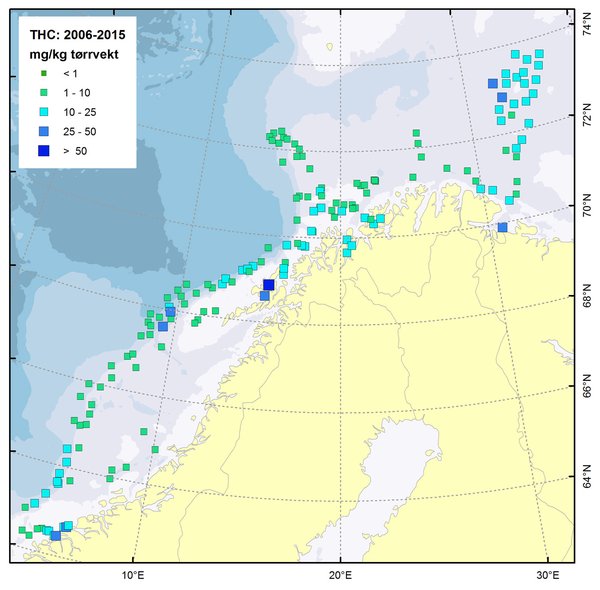
Biodiversity and habitatsBiodiversity and habitats have been investigated for Tromsøflaket, Nordland VII, Troms II and Eggakanten. So far, habitat maps and biological results have been published on www.mareano.no for the eastern parts of Tromsøflaket and for Eggakanten. A habitat map that also covers the western part of Tromsøflaket is ready, and will be published together with Troms II. Our research shows that habitats can be predicted with a high degree of certainty in areas that have been systematically mapped using video. Material obtained from bottom samples, which include over 1000 species, provide information about biodiversity and productivity. In general, the habitats with coarse substrates near the edge of the continental shelf have greatest biodiversity. Environmental chemistry and pollutionEnvironmental chemistry and pollution have been investigated for Tromsøflaket, Nordland VII, Troms II and Eggakanten. The results for Tromsøflaket, Troms II and parts of Nordland VII have been published on www.mareano.no. Findings from the other areas investigated show the Barents Sea to be a clean sea, with low concentrations of PAHs. Certain heavy metals have significant natural variation. There is no significant man-made contamination, but natural leaks of hydrocarbons should be investigated. |