Mareano

About MAREANO

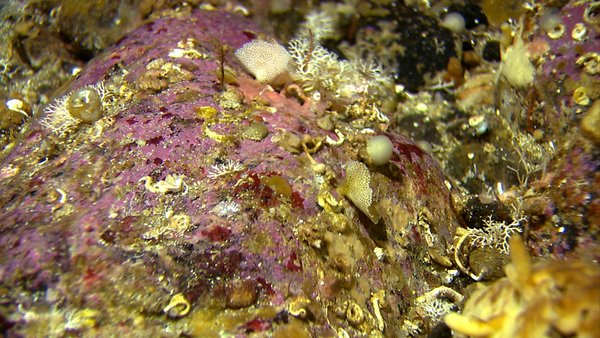
MAREANO maps depth and topography, sediment composition, biodiversity, habitats and biotopes as well as pollution in the seabed in Norwegian coastal and offshore regions. The Programme aims to provide answers to questions such as:

  • How is the seascape of the Norwegian continental shelf?
  • What does the seabed consist of?
  • How is the biodiversity distributed on the seabed?
  • How are habitats and biotopes distributed on the seabed?
  • What is the relationship between the physical environment, biodiversity and biological resources?
  • How are contaminants stored in sediments?

MAREANO is coordinated by the Institute of Marine Research, in collaboration with the Geological Survey of Norway and the Norwegian Hydrographic Service.

The Programme is financed by the Ministry of Fisheries and Coastal Affairs, the Ministry of Environment and the Ministry of Trade and Industry via contributions from the National Budget.

  • Financial contribution in 2006: MNOK 23.6
  • Financial contribution in 2007: MNOK 32.6
  • Financial contribution in 2008: MNOK 32.6
  • Financial contribution in 2009: MNOK 51.5
  • Financial contribution in 2010: MNOK 51.5

First phase: 2006–2010

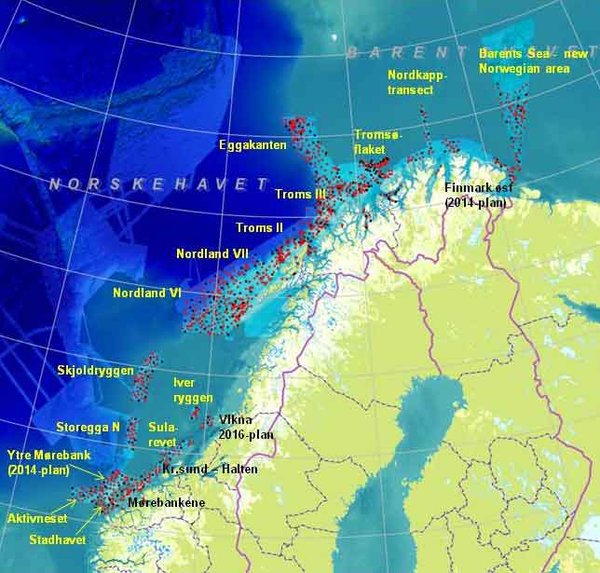
MAREANO will fill knowledge gaps related to seabed conditions and biodiversity defined in The Integrated Management Plan for the Marine Environment of the Barents Sea and the Sea Areas off the Lofoten Islands presented by the Government in 2006. The Plan is due to be revised in 2010, and MAREANO will contribute to a better knowledge base for managing human activities such as fishing and oil and gas exploitation. Priority mapping areas for this phase are located along the shelf break and on the continental shelf in the western part of the mapping area. In the Management Plan, these areas are regarded as being especially ecologically important and vulnerable.

MAREANO 2005-2010

Main products

For the revision of the Management Plan MAREANO will deliver:

  • information about seabed characteristics and biotopes
  • information about the distribution of benthic fauna, communities, biological diversity and production
  • information about contaminants in the sediments
  • detailed bathymetric maps
  • online database and map services collecting information on Norwegian coastal and ocean regions