Topics


Biodiversity

Biodiversity is a general term used to describe the diversity of life forms, species and the communities that they form.

18.12.2012

How do we map biotopes?

The species on the sea floor are not evenly distributed: they appear in clusters associated with various environments and sea floor types. Each combination of certain species with a particular environment is known as a biotope, or “nature type”. It is important to know how species are distributed if you want to manage the sea floor as sustainably as possible.

18.12.2012

Bottom sediments (particle size)

What kind of material actually covers the seabed, and why do some areas offer a good foothold for corals and sponges, while others are teeming in crabs and starfish?

14.12.2012

Formation of bottom sediments

The composition of the sediments, their forms and how they lie in the landscape indicate which processes have been active in shaping the seabed as it is today. These processes have been going on for thousands of years, ever since the end of the last Ice Age.

14.12.2012

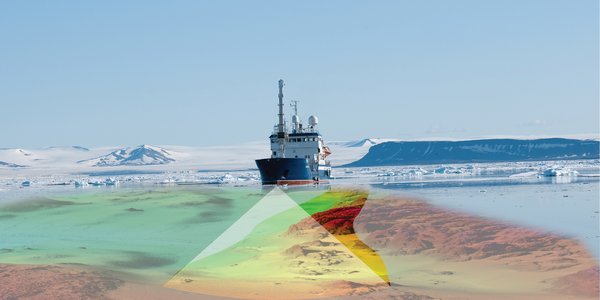
Bathymetric mapping

The Norwegian Mapping Authority Hydrographic Service (NHS) is responsible for acquiring bathymetric data in areas which are to be mapped by the MAREANO program.

14.12.2012

Fish Communities

Fish communities in the Barents Sea.

03.04.2013

Hard and soft bottoms

AJust like the land surface, the seabed varies in character, and ranges from bare rock and boulders to soft clay.

18.12.2012

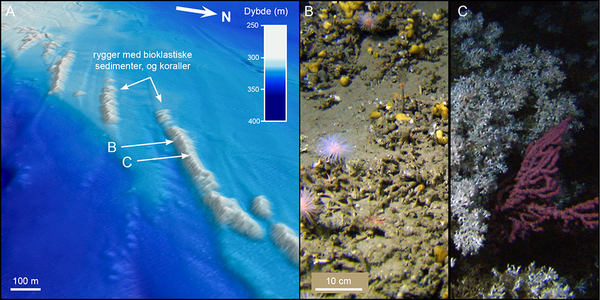
Coral reefs

Deep-water coral reefs have many similarities with coral reefs in shallow, warm waters. Amongst other things, they are made of stony corals, and are home to incredibly rich biodiversity. In Norway, the reefs are formed by the coral species Lophelia pertusa.

14.12.2012

Marine landscape

A landscape of mountains and valleys is concealed deep beneath the water surface. Thanks to modern technology, it is possible to map this with great precision and to display terrain forms only a few metres in extent.

18.12.2012

Environmental chemistry and pollution

The seabed receives contaminants from the environemnt, and sediments become a significant  storage place for pollutants. Sediments can therefore be a source of pollution in the fjords and of the uptake of contaminants by biota.

26.04.2013